Graphical Abstract
Abstract
Background. The COVID-19 pandemic adversely affected adolescent mental health. This study compares pediatric intensive care unit admissions (PICU) due to adolescent suicide attempts across pre-pandemic, pandemic, and post-COVID periods.
Methods. This retrospective study included adolescents aged 9–18 years admitted to the pediatric intensive care unit of Mersin City Training and Research Hospital for suicide attempts. Data were classified into pre-COVID (January 2019–March 2020), COVID (April 2020–March 2022), and post-COVID (April 2022–August 2024) periods. Variables included demographics, suicide method, psychiatric history, previous attempts, organ support, and outcomes.
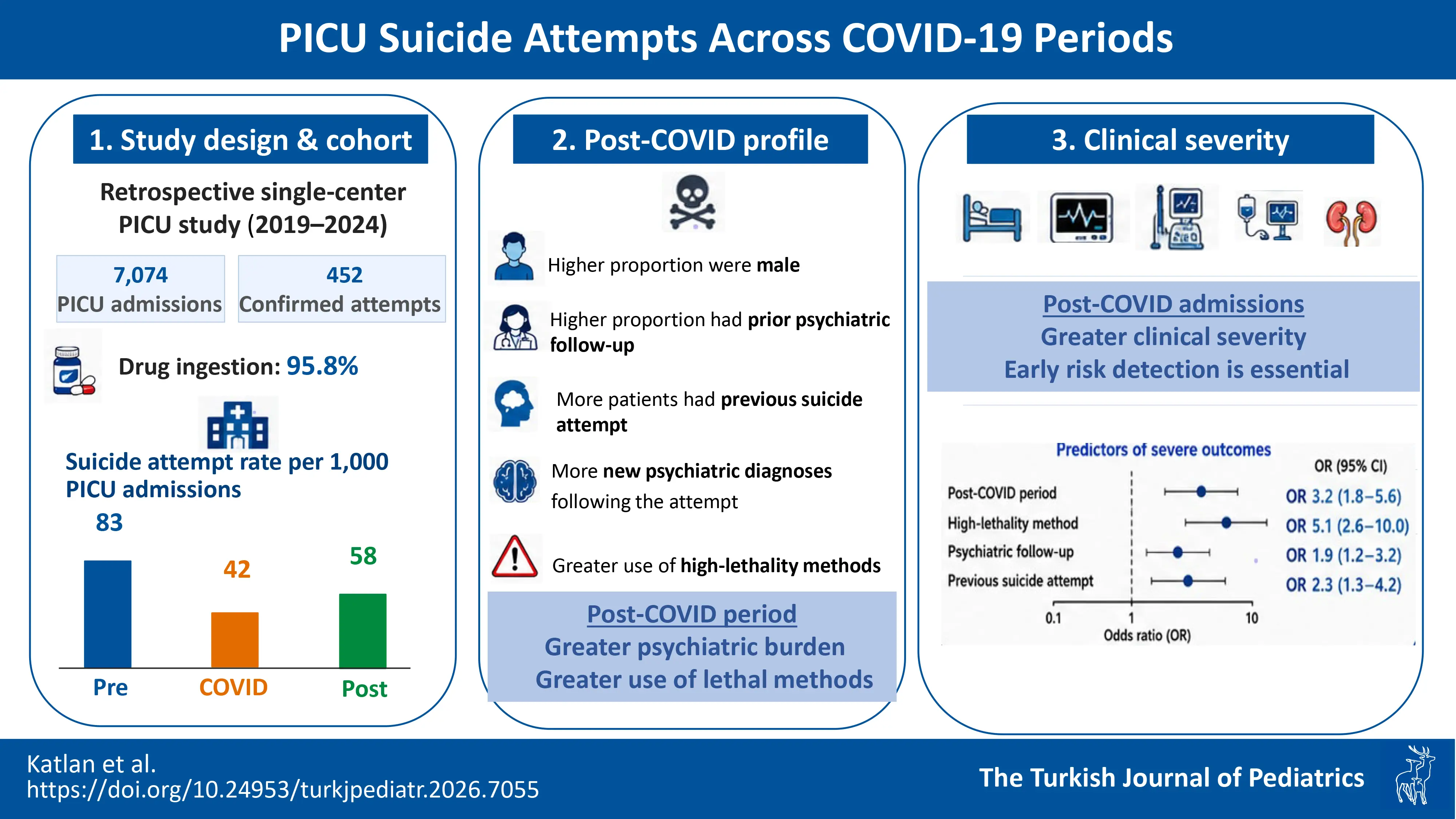
Results. Of the 7,074 PICU admissions, 452 (6.4%) were for suicide attempts. Drug ingestion was predominant (95.8%). In the post-COVID period, the proportion of male cases, multiple-drug ingestions, and use of high-lethality methods increased, along with a greater need for intensive organ support. Mortality was observed only in the post-COVID period, with a rate of 1.8%. Logistic regression identified high-lethality methods, psychiatric follow-up, and previous attempts as predictors of severe outcomes in the post-COVID period.
Conclusions. Adolescent suicide attempts requiring PICU admission became more severe after COVID-19. Early risk detection and targeted interventions are essential.
Keywords: adolescent, COVID-19, pandemic, pediatric intensive care, suicide attempt
Introduction
Suicide is one of the most preventable causes of death in adolescents. It ranks as the second leading cause of death among individuals aged 10–24 in the United States.1 Periods of social and economic crisis are associated with heightened vulnerability to self-harm and suicidal behavior in this age group, a pattern that became more pronounced during and after the COVID-19 pandemic. This heightened vulnerability may be driven by prolonged social isolation and educational disruption, compounded by increased family and financial stressors and reduced access to mental health services, collectively creating a fragile psychosocial environment for adolescents.2-6 In a meta-analysis including over 100 studies from 31 countries conducted during the COVID-19 pandemic, the prevalence of suicidal ideation among adolescents was 22.4%, underscoring the substantial burden of suicide-related risk during this period.7 In this context, early identification and effective prevention strategies are critically important.8-10 While many studies have investigated psychiatric presentations in emergency departments (ED)6,11-17 data on adolescents with suicide attempts (SA) requiring pediatric intensive care unit (PICU) admission remain limited.18-21 These cases represent the most severe end of the clinical spectrum and provide a unique opportunity to better understand adolescent suicidal behavior. The current study evaluates adolescents admitted to the PICU for SA across pre-, during-, and post-COVID periods. It aims to characterize changes in case profile and clinical severity, and to inform targeted prevention strategies. To the best of our knowledge, this study is among the few that provide a longitudinal evaluation of pre-pandemic, pandemic, and post-COVID periods in adolescents admitted to the PICU for SA.
Methods
The study was conducted in the PICU of Mersin City Training and Research Hospital. This tertiary-level unit has 30 beds and functions as a regional referral center for critically ill children. Annually, 1,500–2,000 patients are admitted, reflecting a broad referral region encompassing both urban and rural areas. The unit’s case mix is heterogeneous, with a wide spectrum of medical and surgical critical illnesses. The study included adolescent patients admitted due to SA during the pre-COVID, COVID, and post-COVID periods. We included patients aged 9–18 years with confirmed SA. A confirmed SA was defined as a self-inflicted, harmful act performed with intent to die, with suicidal intent verified by psychiatric assessment and documented in the medical record. High-lethality was defined as suicide methods with a high probability of death even with timely medical intervention. This category included hanging, firearms, and jumping from heights. Cardiotoxic drug ingestions, as well as massive or multiple–high-dose drug overdoses, were also classified as high-lethality. All other drug ingestions were considered low lethality. Cases without documented suicidal intent, including non-suicidal self-injury, accidental ingestions, or incomplete medical records, were excluded. Data were collected from electronic medical records and categorized based on the timeline of the pre-COVID (January 2019 – March 2020), during COVID (April 2020 – March 2022), and post-COVID (April 2022 – August 2024) periods. Collected data included demographic characteristics and clinical details such as SA method, Glasgow Coma Scale (GCS) score on admission, comorbidities, psychiatric history, history of previous SA, presence of organ failure, and trauma. In addition, information on treatments and interventions (mechanical ventilation (MV), hemodynamic support, renal replacement therapy (RRT), surgery) and outcomes (length of stay, complications, mortality) was recorded. The severity of illness at admission was assessed using the Pediatric Risk of Mortality III (PRISM III) score, which evaluates physiologic variables within the first 12 hours of PICU admission to estimate the risk of mortality. Higher scores indicate greater clinical severity. Ethical approval for the study was obtained from the Toros University Ethics Committee (Approval Number: 123).
Statistical analysis
All statistical analyses were performed using SPSS Statistics version 26.0 (IBM Corp., Armonk, NY, USA). Continuous variables were tested for normality using the Kolmogorov–Smirnov test. Normally distributed variables were presented as mean ± standard deviation (minimum–maximum). Categorical variables were expressed as counts and percentages. For comparisons between two groups, the Student’s t-test was used for normally distributed variables. For comparisons across the three study periods, the one-way ANOVA or Kruskal–Wallis test was applied depending on distributional assumptions, followed by Bonferroni-adjusted post-hoc tests where appropriate. Categorical variables were compared using the Chi-square test or Fisher’s exact test when expected cell counts were <5. To identify independent risk factors associated with severe clinical outcomes, a multivariate logistic regression analysis was conducted. For multivariable analysis, logistic regression was used to identify independent predictors of severe clinical outcomes. Severe clinical outcome was defined as the presence of at least one of the following: need for invasive mechanical ventilation, hemodynamic support, renal replacement therapy, surgical intervention, prolonged PICU stay, or mortality. Candidate variables were selected based on clinical relevance and significant or near-significant associations in univariate comparisons. The variables entered into the model were study period, sex, high-lethality method, psychiatric follow-up history, and previous suicide attempt. These variables were chosen because they are established or biologically plausible predictors of clinical severity in adolescent suicide attempts and showed meaningful differences across study periods in the present cohort. Because mortality events were rare, multivariable modeling for mortality was not performed. Results were reported as odds ratios (ORs) with corresponding 95% confidence intervals (CIs) and p-values. Statistical significance was set at a two-tailed p-value <0.05.
Results
A total of 7,074 pediatric patients were admitted to our PICU during the approximately 6-year study period. Of these, 452 patients (6.4%) were hospitalized due to SA. The patient screening and inclusion process is summarized in Fig. 1. To account for differences in overall PICU activity across the study periods, the incidence of SA per 1,000 PICU admissions was calculated: 83/1000 in the pre-COVID period, 42/1000 during COVID, and 58/1000 in the post-COVID period. Among them, 362 (80.0%) were girls and 90 (20.0%) were boys. The overall mean age of the patients was 15.5 ± 1.5 years (range: 9–18 years). The most common method of SA was drug ingestion, observed in 433 patients (95.8%). This was followed by jumping from a height in 13 patients (2.9%), self-inflicted injuries with sharp objects in 3 patients (0.7%), and hanging in 2 patients (0.4%). A history of psychiatric follow-up was present in 118 patients (26.1%), while 24 patients (5.3%) had a previous history of SA.
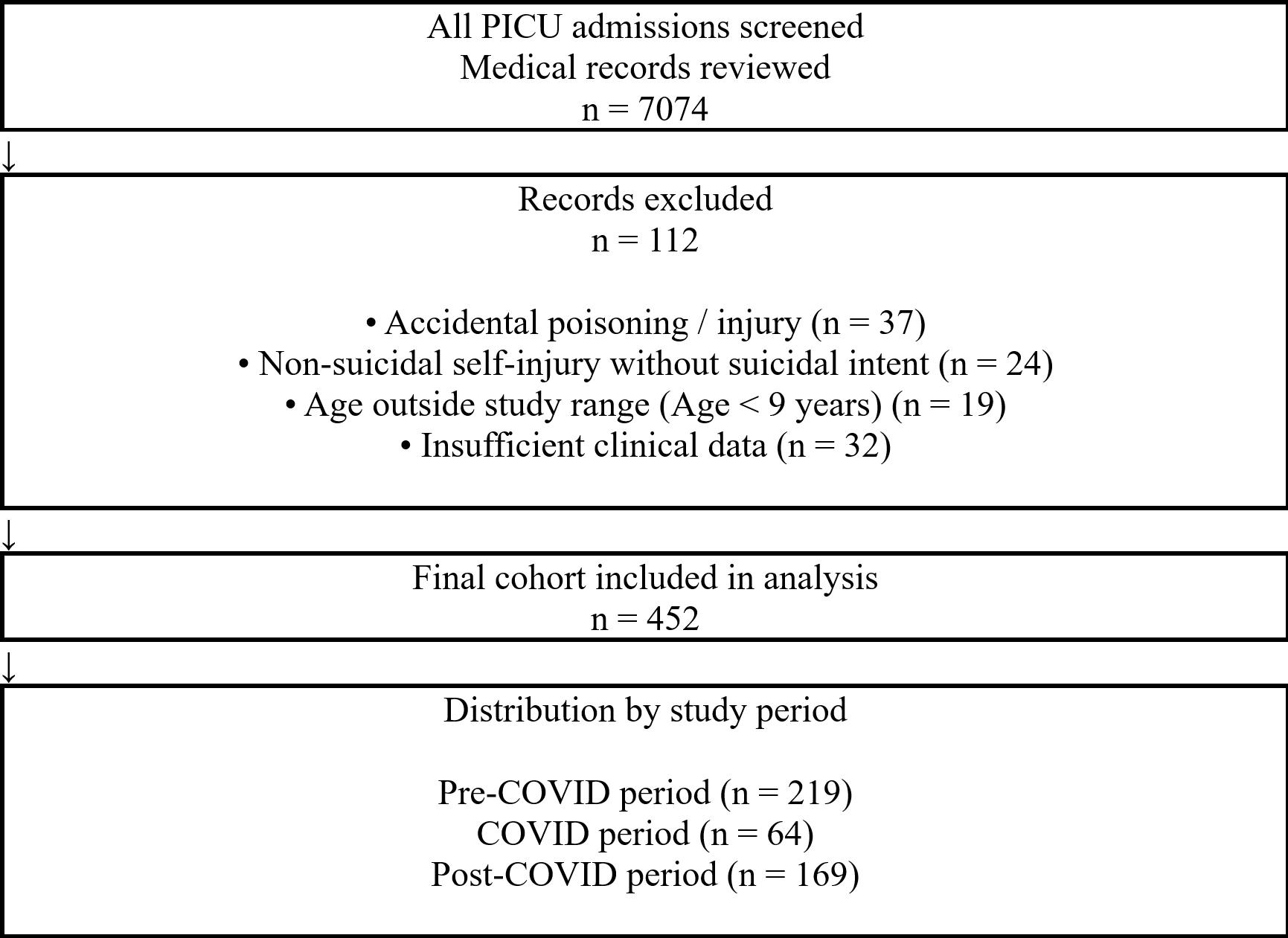
In the pre-COVID period, a total of 219 patients (48.4%) were admitted. Of these, 187 (85.4%) were female and 32 (14.6%) male, with a mean age of 15.5 ± 1.4 years. Regarding the method of attempt, drug ingestion was observed in 216 patients (98.6%), while jumping from a height was reported in 3 patients (1.4%). Psychiatric follow-up was present in 33 patients (15.1%), and a history of prior attempts was recorded in 5 patients (2.3%). No deaths were reported during this period. The mean PICU length of stay was 1.65 ± 0.8 days (range: 1–6 days). Detailed data are presented in Table I.
|
PICU: Pediatric intensive care unit; PRISM score: Pediatric Risk of Mortality score. Continuous variables were compared using one-way ANOVA. Categorical variables were compared using the Chi-square test or Fisher’s exact test, as appropriate. When the overall p-value was significant, pairwise post-hoc comparisons were performed with Bonferroni correction. Different superscript letters within the same row indicate statistically significant differences between groups. Groups sharing at least one common superscript letter are not significantly different from each other. |
||||
| Table I. Patients’ characteristics of suicide attempts across study groups. | ||||
|
|
|
|
|
|
| Number of patients |
|
|
|
|
| Age (years), mean ± SD |
|
|
|
|
| Sex: F/M, n (%) |
|
|
|
|
| Suicide method, n (%) | ||||
| Drug intoxication | ||||
| Female |
|
|
|
|
| Male |
|
|
|
|
| Multi-drug ingestion |
|
|
|
|
| Delayed presentation |
|
|
|
|
| Jumping from a height |
|
|
|
|
| Female |
|
|
|
|
| Male |
|
|
|
|
| Hanging |
|
|||
| Female |
|
|
|
|
| Male |
|
|
|
|
| Firearm-related methods |
|
|||
| Female |
|
|
|
|
| Male |
|
|
|
|
| Psychiatric history | ||||
| Psychiatric follow-up |
|
|
|
|
| Previous suicide attemp |
|
|
|
|
| Organ support requirements | ||||
| Mechanical ventilation |
|
|
|
|
| Renal replacement therapy |
|
|
|
|
| Hemodynamic support |
|
|
|
|
| PRISM III score, mean ± SD (range) |
|
|
|
|
| Length of PICU stay, days (mean ± SD) |
|
|
|
|
| Mortality, n (%) |
|
|
|
|
During the COVID period, a total of 64 patients (14.1%) were admitted. Of these, 54 (84.4%) were female and 10 (15.6%) male, with a mean age of 15.5 ± 1.6 years. In all cases, the method of attempt was drug ingestion (100%). Psychiatric follow-up was reported in 21 patients (32.8%), and a history of prior attempts was documented in 5 patients (7.8%). No deaths occurred in this period. The mean PICU length of stay was 1.93 ± 0.93 days (range: 1–5 days) (Table I).
In the post-COVID period, a total of 169 patients (37.4%) were admitted. Of these, 121 (71.6%) were female and 48 (28.4%) male, with a mean age of 15.6 ± 1.6 years. The methods of attempt included drug ingestion in 153 patients (90.5%), jumping from a height in 11 (6.5%), sharp object injuries in 3 (1.8%), and hanging in 2 (1.2%). Psychiatric follow-up was reported in 64 patients (37.9%), while 14 patients (8.3%) had a history of prior attempts. There were 3 deaths (1.8%) during this period. The mean PICU length of stay was 2.57 ± 3.08 days (range: 1–34 days) (Table I).
Statistically significant differences were observed between periods in terms of sex distribution (p=0.01), suicide methods (jumping from a height, p=0.03), multiple drug ingestion (p=0.0002), psychiatric follow-up (p<0.0001), and previous SA (p=0.0208), with these findings being more prominent in the post-COVID period. Significant variations were also found in the need for MV (p=0.005), RRT (p=0.016), hemodynamic support (p=0.005) and PICU length of stay (p<0.001), all of which were higher in the post-COVID period. Mortality rates did not differ significantly (p=0.080). A detailed analysis of these differences is provided in Table I.
Across study periods, the proportion of patients under psychiatric follow-up before SA was 33/219 (15.1%) in the pre-COVID period, 21/64 (32.8%) during COVID, and 65/169 (38.5%) in the post-COVID period (p<0.05). Among these patients, depressive disorders, and anxiety disorders differed significantly across periods (p<0.05), whereas substance use disorders and attention-deficit/hyperactivity disorder (ADHD) did not (p>0.05). Recurrent SA were observed in 5/219 patients (2.3%) in the pre-COVID period, 5/64 patients (7.8%) during the COVID period, and 14/169 patients (8.3%) in the post-COVID period (p<0.05). In recurrent cases, depressive disorders differed significantly across periods (p<0.05), while anxiety disorders and ADHD did not (p>0.05). The number of patients receiving a new psychiatric diagnosis after SA was 23/219 (10.5%) in the pre-COVID period, 24/64 (37.5%) during COVID, and 50/169 (29.6%) in the post-COVID period (p<0.05). New diagnoses of depressive disorders, anxiety disorders differed significantly across periods (p<0.05), whereas substance use disorders and ADHD did not (p>0.05). Psychiatric status across study periods is presented in Table II.
|
SA: suicide attempts; ADHD: Attention-Deficit/Hyperactivity Disorder. Continuous variables were compared using one-way ANOVA. Categorical variables were compared using the Chi-square test or Fisher’s exact test, as appropriate. When the overall p-value was significant, pairwise post-hoc comparisons were performed with Bonferroni correction. Different superscript letters within the same row indicate statistically significant differences between groups. Groups sharing at least one common superscript letter are not significantly different from each other. |
||||
| Table II. Psychiatric status across study periods: follow-up, recurrence, and new diagnoses. | ||||
|
|
|
|
|
|
| Patients under psychiatric follow-up before SA n/n(%) |
|
|
|
|
| Diagnosis | ||||
| Depressive disorders n (%) |
|
|
|
|
| Anxiety disorders n (%) |
|
|
|
|
| ADHD n (%) |
|
|
|
|
| Bipolar disorder n (%) |
|
|
|
|
| Substance use disorders n (%) |
|
|
|
|
| Recurrent SA |
|
|
|
|
| Diagnosis | ||||
| Depressive disorders n (%) |
|
|
|
|
| Anxiety disorders n (%) |
|
|
|
|
| ADHD n (%) |
|
|
|
|
| Bipolar disorder n (%) |
|
|
|
|
| Substance use disorders n (%) |
|
|
|
|
| New psychiatric diagnoses after SA |
|
|
|
|
| Diagnosis | ||||
| Depressive disorders n (%) |
|
|
|
|
| Anxiety disorders n (%) |
|
|
|
|
| ADHD n (%) |
|
|
|
|
| Bipolar disorder n (%) |
|
|
|
|
| Substance use disorders n (%) |
|
|
|
|
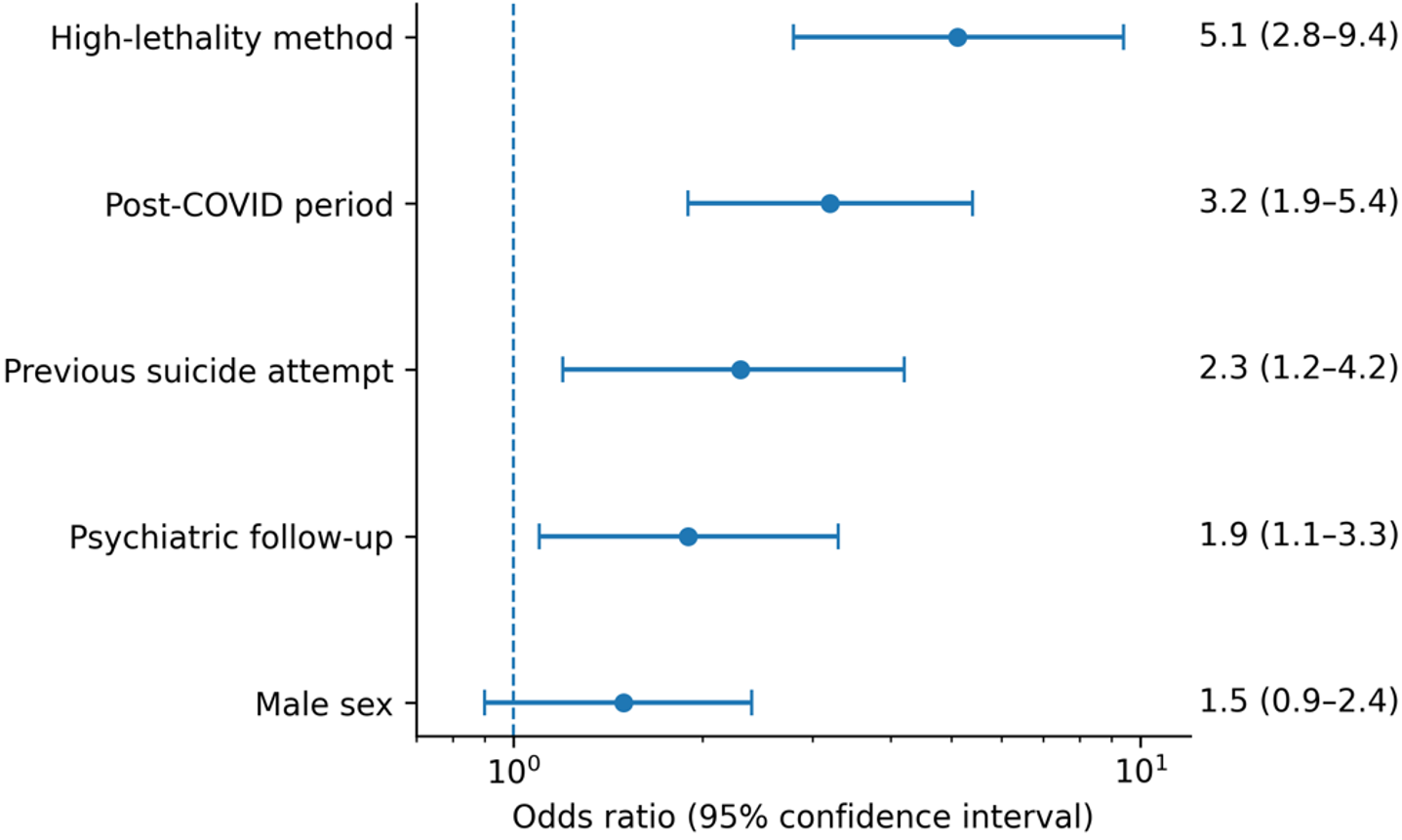
In the multivariate logistic regression analysis, the post-COVID period was identified as an independent risk factor for severe clinical outcomes (OR = 3.2; 95% CI: 1.9–5.4; p=0.004). Because mortality events were extremely rare (n=3), multivariate modeling for mortality was not performed. The use of high-lethality methods (hanging, firearms, jumping from a height) was strongly associated with a 5.1-fold increase in severe clinical outcomes (OR = 5.1; 95% CI: 2.8–9.4; p<0.001) and an 8.7-fold increase in mortality risk (OR = 8.7; 95% CI: 3.5–16.2; p<0.001). A history of psychiatric follow-up was associated with a 1.9-fold increased risk of severe clinical outcomes (OR = 1.9; 95% CI: 1.1–3.3; p=0.02). Similarly, a history of previous SA was linked to a 2.3-fold increase in the likelihood of severe clinical outcomes (OR=2.3; 95% CI: 1.2–4.2; p = 0.01). Male sex was associated with a 1.5-fold increase in severe clinical outcomes (OR=1.5; 95% CI: 0.9–2.4), although this was not statistically significant for mortality (p=0.08). The results of the multivariate analysis are illustrated in Fig. 2.
Discussion
In the present single-center PICU cohort spanning three distinct periods (pre-COVID, COVID, and post-COVID), a marked shift in the clinical profile of adolescent SA was observed. We identified (i) a reduction in SA–related admissions during the acute pandemic phase followed by a relative increase in the post-COVID period, (ii) a progressive shift toward higher-lethality methods, including among female adolescents, (iii) a marked increase in clinical severity during and after the COVID-19 period, and (iv) a growing burden of psychiatric comorbidity and recurrent SA. Together, these findings suggest that the impact of the COVID-19 pandemic on adolescent suicidal behavior extends beyond the acute phase and may manifest as a delayed and cumulative psychosocial burden. Given that the study periods differ primarily in their temporal relationship to the pandemic, our findings may be more consistent with pandemic-specific stressors than with underlying secular trends. Existing multicenter PICU studies from Germany, the US, and Europe have provided important insights into the acute pandemic phase but have not examined post-COVID trajectories.18-21 In contrast, the longitudinal design of the present study captures changes across the full pandemic timeline, revealing sustained and progressively worsening clinical consequences following the initial COVID-19 period.
The impact of the COVID-19 pandemic on adolescent mental health has been examined primarily through child and adolescent psychiatry–based studies5,7,21-35 and ED data.2,6,12,15,16,36-46 Child and adolescent psychiatry–based studies have focused on both the mental health impact of the pandemic and the underlying mechanisms driving these changes in adolescents. Existing evidence, including multi-country reviews and meta-analyses, has consistently demonstrated a marked deterioration in mental health during and after the COVID-19 pandemic, characterized by increased depressive and anxiety symptoms, suicidal ideation, self-harm behaviors, and heightened psychosocial vulnerability.5,7,21-35 A summary of child and adolescent psychiatry–based studies is provided in Supplementary Table S1. In parallel, ED-based studies have reported substantial changes in the frequency and temporal distribution of suicide-related presentations among adolescents during the pandemic.2,6,12,15,16,36-46 In this context, Madigan et al., in a multicountry meta-analysis including 42 studies from 18 countries, reported increased ED presentations for suicidal ideation and SA among children and adolescents, despite marked regional heterogeneity.6 A summary of ED-based studies is provided in Supplementary Table S2. However, ED-based data generally include limited objective indicators of clinical severity and may not adequately capture the most medically severe presentations. In this context, PICU-based studies provide a complementary perspective by capturing the most medically severe manifestations of suicidal behavior. Multicenter PICU reports have demonstrated heterogeneous patterns during the pandemic. For example Bruns et al. from Germany reported a decline in SA–related PICU admissions during the acute pandemic phase, followed by a substantial increase in subsequent periods.18 Moral-Larraz et al. examined the 2017–2021 period in a single tertiary-level PICU and reported a significant increase in PICU admissions for SA in 2021 compared with previous years, corresponding to a 230% increase in the median number of admissions.19 In the United States, Mc Cluskey et al. observed that although the absolute number of PICU admissions for self-harm or SA remained relatively stable, their proportion increased due to a concurrent reduction in overall PICU admissions.20 Conversely, Corrigan and colleagues from Australia identified an early rise in PICU admissions for self-harm during the initial phase of the pandemic.21 Taken together, these findings suggest that the impact of the COVID-19 pandemic on severe adolescent suicidal behavior is influenced by country-specific factors, healthcare system characteristics, and patterns of healthcare utilization.
Pre-pandemic literature consistently demonstrates marked sex-based differences in suicide method lethality, with female adolescents more often using lower-lethality methods and male adolescents more frequently employing highly lethal methods.47-50 Interestingly, over the period from 1999 to 2020, Ormiston and colleagues reported a progressive shift toward higher-lethality suicide methods, most notably among female adolescents, which continued into the first year of the COVID-19 pandemic.51 Our pre-pandemic findings are consistent with the established literature on sex-based differences in suicide methods. In contrast, in our cohort, the pandemic period—most prominently the post-COVID phase—was associated with a clear shift toward higher-lethality methods in both sexes. This pattern was reflected by a greater use of high-risk methods among girls, such as jumping from a height, and by the emergence of distinctly high-lethality methods among boys, including hanging and firearm-related attempts. In parallel, the pre-pandemic sex gap in method lethality appeared to narrow. This convergence may be driven by two co-occurring patterns: an increase in high-risk, potentially lethal attempts among female adolescents and a relative rise in the proportion of male patients requiring PICU admission. This attenuation of sex differences during and after the COVID-19 pandemic may reflect context-specific psychosocial pressures rather than a simple continuation of long-term secular trends. Although the literature evaluating changes in SA methods during the COVID-19 pandemic remains limited, emerging data support a similar pattern. Consistent with our findings, Auger et al. reported that SA–related hospitalizations increased markedly among girls aged 10–14 years in Quebec during the pandemic; notably, at the beginning of the pandemic, youths aged 10–14 years were more likely to use violent methods, particularly hanging and cutting.52 These findings may be related to sex-specific psychosocial responses to the pandemic. Adolescent girls may have been disproportionately affected by internalizing symptoms (e.g., anxiety and depression) and heightened sensitivity to social disconnection, whereas adolescent boys may have expressed distress through delayed help-seeking and more externalizing trajectories (e.g., impulsivity, anger, and risk-taking). Despite these potentially distinct pathways, shared exposure to prolonged social isolation, educational disruption, bereavement, and reduced access to mental health services may have contributed over time to more planned, high-risk, and clinically more severe SA.53-57
Independent of the pandemic, it is well established that the increasing lethality of SA methods is accompanied by a stepwise escalation in clinical severity. For example, a large-scale analysis based on the U.S. Virtual Pediatric Systems (VPS) database (2009–2017) demonstrated that mortality among patients admitted to the PICU for SA or deliberate self-harm was predominantly associated with high-lethality methods, such as hanging/asphyxia and firearms.58 In parallel with these findings, our study shows that during and after the COVID-19 period, increasing method lethality was accompanied by a marked rise in clinical severity, as evidenced by higher PRISM III scores, greater need for invasive organ support, longer PICU length of stay, and the occurrence of mortality exclusively in the post-COVID period. Although between-period differences in mortality did not reach statistical significance, the exclusive occurrence of fatal outcomes in the post-COVID period is clinically noteworthy. This pattern may indicate an emerging shift toward more severe presentations. These findings are broadly consistent with ED-based reports describing increased clinical severity during the COVID-19 period, including longer ED length of stay, higher hospitalization rates, and a disproportionate rise in severe presentations, particularly among adolescent girls. In contrast, COVID-19 PICU-based evidence specifically addressing a potential increase in the clinical severity of SA remains limited.18-21 Much of the existing PICU literature has focused on changes in admission volumes or proportions, while failing to consistently integrate severity indicators that directly quantify clinical burden, such as validated illness severity scores, invasive organ support requirements, or longitudinal outcomes. Nevertheless, several studies suggest that the pandemic may have influenced not only admission volume but also clinical severity. Bruns et al. reported more severe clinical presentations among adolescents admitted to the PICU for SA during the pandemic, with an approximately threefold increase in the standardized mortality ratio.18 Similarly, in a national multicenter PICU cohort from Australia, Corrigan et al. observed that although overall PICU admissions declined during the early pandemic period, adolescents admitted for deliberate self-harm experienced clinically significant organ support requirements and mortality.21 Against this background, our study contributes to the literature by demonstrating a marked increase in clinical severity during and after the COVID-19 period, supported by objective severity indicators. Overall, the impact of the COVID-19 pandemic on adolescent suicidal behavior does not appear to be limited to a transient acute-phase fluctuation; rather, it may evolve into a delayed, cumulative, and clinically more severe burden.
In our cohort, both the proportion of adolescents with a prior psychiatric history and the rate of recurrent SA increased over time, with this increase becoming most pronounced in the post-COVID period (Table II). Notably, the more frequent use of high-lethality methods among adolescents under psychiatric follow-up points to an escalation of clinical vulnerability associated with the pandemic period. This finding is consistent with the child and adolescent psychiatry literature indicating that the psychological sequelae of the COVID-19 pandemic were more intense and clinically severe among high-risk adolescents. Indeed, in a recent systematic review and meta-analysis by Vardi et al. including 36 studies and data from a total of 1,754,106 adolescents, suicide-related behaviors followed a heterogeneous trajectory in the general population; in contrast, a marked increase in self-harm and SA was observed among adolescents with a psychiatric history who were followed in clinical settings.59 Concordantly, the multicenter PREP-kids study by Ougrin et al. demonstrated that during the COVID-19 period, the proportion of children and adolescents presenting with self-harm who had a pre-existing psychiatric history increased.15 Carballo et al. (STOP Consortium) emphasized that suicidality in children and adolescents reflects a cumulative risk process arising from the convergence of psychiatric vulnerabilities—particularly depression and anxiety, prior self-harm or SA, impulsivity, and hopelessness—with familial and social stressors, rather than a single triggering event.60 This framework provides a compelling explanation for why, under the prolonged and layered stress burden of the pandemic, more severe and recurrent SA became increasingly apparent, especially among high-risk adolescents.
Another notable finding was an increased proportion of adolescents who initiated psychiatric treatment and entered regular follow-up after the index attempt. In the pre–COVID period, SA were predominantly impulsive, typically emerging in the context of an acute crisis and often followed by regret. In contrast, during the pandemic, a marked increase was observed in the proportion of adolescents newly diagnosed with depression and anxiety in the aftermath of a SA. This observation aligns with large-scale child and adolescent psychiatry studies reporting a significant rise in the incidence of depressive and anxiety disorders among adolescents during the COVID-19 pandemic. For example, the European Society for Child and Adolescent Psychiatry led COVID-19 Child and Adolescent Psychiatry Consortium longitudinal survey showed that the mental health burden in children and adolescents increased substantially as the pandemic progressed. Despite a partial normalization of service delivery over time, suicidal crises, depressive disorders, anxiety disorders, and other severe psychiatric presentations accounted for a growing proportion of referrals and assessment requests.61 Overall, during the COVID-19 era, we observed increases both in SA among adolescents with pre-existing psychiatric diagnoses and in new-onset cases receiving a first psychiatric diagnosis and entering regular follow-up. Collectively, these findings suggest that the pandemic not only exacerbated existing psychiatric vulnerabilities but may also have precipitated a new, potentially persistent psychopathological process in adolescents who had not previously manifested clinically overt mental health problems.
In multivariate analysis, the post-COVID period was associated with an increased likelihood of severe non-fatal clinical outcomes. High-lethality methods were associated with greater clinical severity and were more frequently observed among fatal cases, while prior psychiatric follow-up and a history of previous SA were linked to increased severity. Male sex was associated with severity but not mortality; however, this finding should be interpreted cautiously given the limited number of deaths and potential shifts in method lethality patterns (Fig. 2).
Our findings suggest increased psychological vulnerability among adolescents in the post-COVID period, highlighting the importance of early risk identification. Targeted mental health screening in high-burden settings, particularly the ED and PICU, may support timely referral and multidisciplinary care. Furthermore, preventive strategies must be adapted to the specific needs of each period. During the pandemic, the expansion of telepsychiatry and digital mental health platforms helped bridge critical gaps in care. In the post-COVID phase, however, school-based mental health programs, stress resilience training, and accessible psychosocial support services should take precedence. Across all periods, a common necessity is equipping parents, educators, and healthcare professionals with the skills to recognize early warning signs, respond promptly, and guide adolescents toward appropriate care.
This study has several limitations. This single-center, retrospective design may limit generalizability. Reliance on medical records restricted access to psychosocial data. The three periods differed in duration, which may influence comparisons across time. Mortality findings are limited by the very small number of deaths (n=3), and multivariate analysis for mortality was not feasible. Logistic regression is also restricted by the low number of events relative to covariates and findings should therefore be interpreted as exploratory. The absence of long-term follow-up data also restricts the ability to assess subsequent psychiatric trajectories. Therefore, future multicenter prospective studies incorporating psychosocial variables and long-term outcomes are needed.
Conclusion
Suicide attempts requiring PICU admission became progressively more severe during and after the COVID-19 pandemic, pointing to a cumulative psychological burden. This underscores the need for early risk identification and sustained post-COVID mental health surveillance among high-risk adolescents.
Supplementary materials
Supplementary materials for this article are available online at https://doi.org/10.24953/turkjpediatr.2026.7055
Acknowledgements
The authors would like to thank all staff members of the Pediatric Intensive Care Unit at Mersin City Training and Research Hospital for their support.
Ethical approval
The study was approved by Toros University Ethics Committee (date: June 25, 2024, number: 123).
Source of funding
The authors declare the study received no funding.
Conflict of interest
The authors declare that there is no conflict of interest.
References
- World Health Organization (WHO). Suicide. WHO; 2025. Available at: https://www.who.int/news-room/fact-sheets/detail/suicid.
- García-Fernández L, Romero-Ferreiro V, Izquierdo-Izquierdo M, et al. Dramatic increase of suicidality in children and adolescents after COVID-19 pandemic start: a two-year longitudinal study. J Psychiatr Res 2023; 163: 63-67. https://doi.org/10.1016/j.jpsychires.2023.04.014
- Glenn CR, Kleiman EM, Kellerman J, et al. Annual research review: a meta-analytic review of worldwide suicide rates in adolescents. J Child Psychol Psychiatry 2020; 61: 294-308. https://doi.org/10.1111/jcpp.13106
- Sandal OS, Ongun EA, Uzun Cicek A, et al. Epidemiology and nature of suicide attempts in children and adolescents at the tertiary care pediatric hospitals: a multicentre retrospective study in Turkey. J Crit Intensive Care 2022; 13: 48-56. https://doi.org/10.37678/dcybd.2022.3054
- Racine N, McArthur BA, Cooke JE, Eirich R, Zhu J, Madigan S. Global prevalence of depressive and anxiety symptoms in children and adolescents during COVID-19: a meta-analysis. JAMA Pediatr 2021; 175: 1142-1150. https://doi.org/10.1001/jamapediatrics.2021.2482
- Madigan S, Korczak DJ, Vaillancourt T, et al. Comparison of paediatric emergency department visits for attempted suicide, self-harm, and suicidal ideation before and during the COVID-19 pandemic: a systematic review and meta-analysis. Lancet Psychiatry 2023; 10: 342-351. https://doi.org/10.1016/S2215-0366(23)00036-6
- Du W, Jia YJ, Hu FH, et al. Prevalence of suicidal ideation and correlated risk factors during the COVID-19 pandemic: a meta-analysis of 113 studies from 31 countries. J Psychiatr Res 2023; 166: 147-168. https://doi.org/10.1016/j.jpsychires.2023.07.040
- Loades ME, Chatburn E, Higson-Sweeney N, et al. Rapid systematic review: the impact of social isolation and loneliness on the mental health of children and adolescents in the context of COVID-19. J Am Acad Child Adolesc Psychiatry 2020; 59: 1218-1239.e3. https://doi.org/10.1016/j.jaac.2020.05.009
- Guessoum SB, Lachal J, Radjack R, et al. Adolescent psychiatric disorders during the COVID-19 pandemic and lockdown. Psychiatry Res 2020; 291: 113264. https://doi.org/10.1016/j.psychres.2020.113264
- Sahoo S, Patra S. A rapid systematic review of the prevalence of suicide and self-harm behaviors in adolescents during the COVID-19 pandemic. Crisis 2023; 44: 497-505. https://doi.org/10.1027/0227-5910/a000906
- Hernández-Calle D, Andreo-Jover J, Curto-Ramos J, et al. Pediatric mental health emergency visits during the COVID-19 pandemic. Scand J Child Adolesc Psychiatr Psychol 2022; 10: 53-57. https://doi.org/10.2478/sjcapp-2022-0005
- Beaudry G, Drouin O, Gravel J, et al. A comparative analysis of pediatric mental health-related emergency department utilization in Montréal, Canada, before and during the COVID-19 pandemic. Ann Gen Psychiatry 2022; 21: 17. https://doi.org/10.1186/s12991-022-00398-y
- Radhakrishnan L, Leeb RT, Bitsko RH, et al. Pediatric emergency department visits associated with mental health conditions before and during the COVID-19 pandemic - United States, January 2019-January 2022. MMWR Morb Mortal Wkly Rep 2022; 71: 319-324. https://doi.org/10.15585/mmwr.mm7108e2
- Leeb RT, Bitsko RH, Radhakrishnan L, Martinez P, Njai R, Holland KM. mental health-related emergency department visits among children aged <18 years during the covid-19 pandemic - United States, January 1-October 17, 2020. MMWR Morb Mortal Wkly Rep 2020; 69: 1675-1680. https://doi.org/10.15585/mmwr.mm6945a3
- Ougrin D, Wong BHC, Vaezinejad M, et al. Pandemic-related emergency psychiatric presentations for self-harm of children and adolescents in 10 countries (PREP-kids): a retrospective international cohort study. Eur Child Adolesc Psychiatry 2022; 31: 1-13. https://doi.org/10.1007/s00787-021-01741-6
- Hill RM, Rufino K, Kurian S, Saxena J, Saxena K, Williams L. Suicide ideation and attempts in a pediatric emergency department before and during COVID-19. Pediatrics 2021; 147: e2020029280. https://doi.org/10.1542/peds.2020-029280
- Guo BC, Chen YJ, Huang WY, Lin MJ, Wu HP. Psychological disorders and suicide attempts in youths during the pre-COVID and post-COVID era in a Taiwan pediatric emergency department. Front Psychol 2023; 14: 1281806. https://doi.org/10.3389/fpsyg.2023.1281806
- Bruns N, Willemsen L, Stang A, et al. Pediatric ICU admissions after adolescent suicide attempts during the pandemic. Pediatrics 2022; 150: e2021055973. https://doi.org/10.1542/peds.2021-055973
- Moral-Larraz A, García-Salido A, Lamagrande-Casanova N, Di Campli-Zaghlul M, Braza-Claver M, Nieto-Moro M. SARS-COV2 pandemic impact on suicide attempts admitted to pediatric critical care: a monographical observational retrospective study. Span J Psychiatry Ment Health 2023; 16: 259-261. https://doi.org/10.1016/j.sjpmh.2023.05.003
- McCluskey CK, Black TR, Zee-Cheng J, et al. Suicide and self-harm in adolescents during the COVID-19 pandemic: a U.S. virtual pediatric systems, LLC, database study of PICU admissions, 2016-2021. Pediatr Crit Care Med 2024; 25: e73-e81. https://doi.org/10.1097/PCC.0000000000003381
- Corrigan C, Duke G, Millar J, et al. Admissions of children and adolescents with deliberate self-harm to intensive care during the SARS-CoV-2 outbreak in Australia. JAMA Netw Open 2022; 5: e2211692. https://doi.org/10.1001/jamanetworkopen.2022.11692
- Jones EAK, Mitra AK, Bhuiyan AR. Impact of COVID-19 on mental health in adolescents: a systematic review. Int J Environ Res Public Health 2021; 18: 2470. https://doi.org/10.3390/ijerph18052470
- Panchal U, Salazar de Pablo G, Franco M, et al. The impact of COVID-19 lockdown on child and adolescent mental health: systematic review. Eur Child Adolesc Psychiatry 2023; 32: 1151-1177. https://doi.org/10.1007/s00787-021-01856-w
- Dubé JP, Smith MM, Sherry SB, Hewitt PL, Stewart SH. Suicide behaviors during the COVID-19 pandemic: a meta-analysis of 54 studies. Psychiatry Res 2021; 301: 113998. https://doi.org/10.1016/j.psychres.2021.113998
- Madigan S, Racine N, Vaillancourt T, et al. Changes in depression and anxiety among children and adolescents from before to during the COVID-19 pandemic: a systematic review and meta-analysis. JAMA Pediatr 2023; 177: 567-581. https://doi.org/10.1001/jamapediatrics.2023.0846
- Wolf K, Schmitz J. Scoping review: longitudinal effects of the COVID-19 pandemic on child and adolescent mental health. Eur Child Adolesc Psychiatry 2024; 33: 1257-1312. https://doi.org/10.1007/s00787-023-02206-8
- Marinelli S, Basile G, De Paola L, Napoletano G, Zaami S. Consequences of COVID-19 restrictions on adolescent mental health and drug abuse dynamics. Eur Rev Med Pharmacol Sci 2024; 28: 836-851. https://doi.org/10.26355/eurrev_202401_35085
- Hosozawa M. Adolescent mental health during and beyond the COVID-19 pandemic. Brain and Nerve 2025; 77: 59-65. https://doi.org/10.11477/mf.188160960770010059.
- Kim S, Hwang J, Lee JH, et al. Psychosocial alterations during the COVID-19 pandemic and the global burden of anxiety and major depressive disorders in adolescents, 1990-2021: challenges in mental health amid socioeconomic disparities. World J Pediatr 2024; 20: 1003-1016. https://doi.org/10.1007/s12519-024-00837-8
- Tamirisa K, Maringanti HB. A narrative review of the factors affecting the mental health of adolescents and young people during the COVID-19 pandemic. Cureus 2024; 16: e66781. https://doi.org/10.7759/cureus.66781
- Chavira DA, Ponting C, Ramos G. The impact of COVID-19 on child and adolescent mental health and treatment considerations. Behav Res Ther 2022; 157: 104169. https://doi.org/10.1016/j.brat.2022.104169
- Ferreira DBB, Santos RMS, Machado MCL, et al. Suicidality and self-harm in adolescents before and after the COVID-19 pandemic: a systematic review. Front Psychiatry 2025; 16: 1643145. https://doi.org/10.3389/fpsyt.2025.1643145
- Frentzen E, Fegert JM, Martin A, Witt A. Child and adolescent mental health during the Covid-19 pandemic: an overview of key findings from a thematic series. Child Adolesc Psychiatry Ment Health 2025; 19: 57. https://doi.org/10.1186/s13034-025-00910-8
- Lal P, Gupta S. Psychological Impact of COVID-19 on children and adolescents: a narrative review of mental health challenges, interventions, and long-term trajectories. Cureus 2025; 17: e81840. https://doi.org/10.7759/cureus.81840
- Parmar V, Arias Castro A, Singh I, Garcia Santiago G, Singh M. Prevalence of suicide among adolescents before and after the COVID-19 pandemic. Cureus 2025; 17: e97166. https://doi.org/10.7759/cureus.97166
- Ridout KK, Alavi M, Ridout SJ, et al. Emergency department encounters among youth with suicidal thoughts or behaviors during the COVID-19 pandemic. JAMA Psychiatry 2021; 78: 1319-1328. https://doi.org/10.1001/jamapsychiatry.2021.2457
- Yard E, Radhakrishnan L, Ballesteros MF, et al. Emergency department visits for suspected suicide attempts among persons aged 12-25 years before and during the COVID-19 pandemic - United States, January 2019-May 2021. MMWR Morb Mortal Wkly Rep 2021; 70: 888-894. https://doi.org/10.15585/mmwr.mm7024e1
- Carison A, Babl FE, O’Donnell SM. Increased paediatric emergency mental health and suicidality presentations during COVID-19 stay at home restrictions. Emerg Med Australas 2022; 34: 85-91. https://doi.org/10.1111/1742-6723.13901
- Lantos JD, Yeh HW, Raza F, Connelly M, Goggin K, Sullivant SA. Suicide risk in adolescents during the COVID-19 pandemic. Pediatrics 2022; 149: e2021053486. https://doi.org/10.1542/peds.2021-053486
- Çoban ÖG, Gül ME, Önder A. Evaluation of children and adolescents admitted to emergency service with suicide attempt. J Pediatr Emerg Intensive Care Med 2022; 9: 153-157. https://doi.org/10.4274/cayd.galenos.2021.69875
- Ferro V, Averna R, Murciano M, et al. Has anything changed in the frequency of emergency department visits and the profile of the adolescent seeking emergency mental care during the COVID-19 pandemic? Children (Basel) 2023; 10: 578. https://doi.org/10.3390/children10030578
- Park JH, Seo YW, Chae S. Impact of the COVID-19 Pandemic on adolescent self-harm: based on a national emergency department information system. Int J Environ Res Public Health 2023; 20: 4666. https://doi.org/10.3390/ijerph20054666
- Ribeiro LGM, Souza DMD, Treichel CADS, Fogaça VD, Rossato LM. Exploring adolescent suicide attempts before and during the coronavirus disease 2019 pandemic: a cross-sectional study. Rev Paul Pediatr 2024; 43: e2024093. https://doi.org/10.1590/1984-0462/2025/43/2024093
- Hoffmann JA, Carter CP, Olsen CS, et al. Pediatric mental health emergency department visits from 2017 to 2022: a multicenter study. Acad Emerg Med 2024; 31: 739-754. https://doi.org/10.1111/acem.14910
- Moscoso A, Cousien A, Serra G, et al. Pediatric suicide attempts lagged during the COVID-19 pandemic: a European multicenter study. Child Adolesc Psychiatry Ment Health 2024; 18: 98. https://doi.org/10.1186/s13034-024-00784-2
- Newberry-Dupe J, Melvin G, King K, et al. Paediatric emergency department mental health and behavioural presentations in Australia before and after the onset of the COVID-19 pandemic: retrospective observational study. J Paediatr Child Health 2025; 61: 910-918. https://doi.org/10.1111/jpc.70046
- Hawton K, Saunders KEA, O’Connor RC. Self-harm and suicide in adolescents. Lancet 2012; 379: 2373-2382. https://doi.org/10.1016/S0140-6736(12)60322-5
- Beautrais AL. Gender issues in youth suicidal behaviour. Emerg Med (Fremantle) 2002; 14: 35-42. https://doi.org/10.1046/j.1442-2026.2002.00283.x
- Berardelli I, Rogante E, Sarubbi S, et al. Is lethality different between males and females? Clinical and gender differences in inpatient suicide attempters. Int J Environ Res Public Health 2022; 19: 13309. https://doi.org/10.3390/ijerph192013309
- Wasserman D, Carli V, Iosue M, Javed A, Herrman H. Suicide prevention in childhood and adolescence: a narrative review of current knowledge on risk and protective factors and effectiveness of interventions. Asia Pac Psychiatry 2021; 13: e12452. https://doi.org/10.1111/appy.12452
- Ormiston CK, Lawrence WR, Sulley S, et al. Trends in adolescent suicide by method in the US, 1999-2020. JAMA Netw Open 2024; 7: e244427. https://doi.org/10.1001/jamanetworkopen.2024.4427
- Auger N, Low N, Chadi N, et al. Suicide attempts in children aged 10-14 years during the first year of the COVID-19 pandemic. J Adolesc Health 2023; 72: 899-905. https://doi.org/10.1016/j.jadohealth.2023.01.019
- Bera L, Souchon M, Ladsous A, Colin V, Lopez-Castroman J. Emotional and behavioral impact of the COVID-19 epidemic in adolescents. Curr Psychiatry Rep 2022; 24: 37-46. https://doi.org/10.1007/s11920-022-01313-8
- Shaygan M, Salari S, Jaberi A, Shaygan S. Gender differences in suicidal ideation during the COVID-19 pandemic among Iranian adolescents and its contributing factors. Issues Ment Health Nurs 2024; 45: 255-271. doi:10.1080/07317107.2024.2332230. https://doi.org/10.1080/07317107.2024.2332230
- Miranda-Mendizabal A, Castellví P, Parés-Badell O, et al. Gender differences in suicidal behavior in adolescents and young adults: systematic review and meta-analysis of longitudinal studies. Int J Public Health 2019; 64: 265-283. https://doi.org/10.1007/s00038-018-1196-1
- Diggins E, Heuvelman H, Pujades-Rodriguez M, House A, Cottrell D, Brennan C. Exploring gender differences in risk factors for self-harm in adolescents using data from the millennium cohort Study. J Affect Disord 2024; 345: 131-140. https://doi.org/10.1016/j.jad.2023.10.106
- Mai AS, Wan YM, Tan BJW, Tan EK. Solving the gender paradox in adolescent suicide: challenges and directions. Front Psychiatry 2024; 15: 1386153. https://doi.org/10.3389/fpsyt.2024.1386153
- McCluskey CK, Klein MJ, Steward SC, Rotta AT. Suicide and self-harm in children and adolescents admitted to PICUs in the United States. Pediatr Crit Care Med 2022; 23: e66-e70. https://doi.org/10.1097/PCC.0000000000002836
- Vardi I, Hamdan S, Zalsman G, Stukalin Y. The effect of the COVID-19 pandemic and school closures on self-harming and suicidal behaviors in adolescents: a comprehensive meta-analysis. Suicide Life Threat Behav 2025; 55: e13156. https://doi.org/10.1111/sltb.13156
- Carballo JJ, Llorente C, Kehrmann L, et al. Psychosocial risk factors for suicidality in children and adolescents. Eur Child Adolesc Psychiatry 2020; 29: 759-776. https://doi.org/10.1007/s00787-018-01270-9
- Revet A, Hebebrand J, Anagnostopoulos D, et al. Perceived impact of the COVID-19 pandemic on child and adolescent psychiatric services after 1 year (February/March 2021): ESCAP CovCAP survey. Eur Child Adolesc Psychiatry 2023; 32: 249-256. https://doi.org/10.1007/s00787-021-01851-1
Copyright and license
Copyright © 2026 The Author(s). This is an open access article distributed under the Creative Commons Attribution License (CC BY), which permits unrestricted use, distribution, and reproduction in any medium or format, provided the original work is properly cited.