A letter to the editor is published about this article:
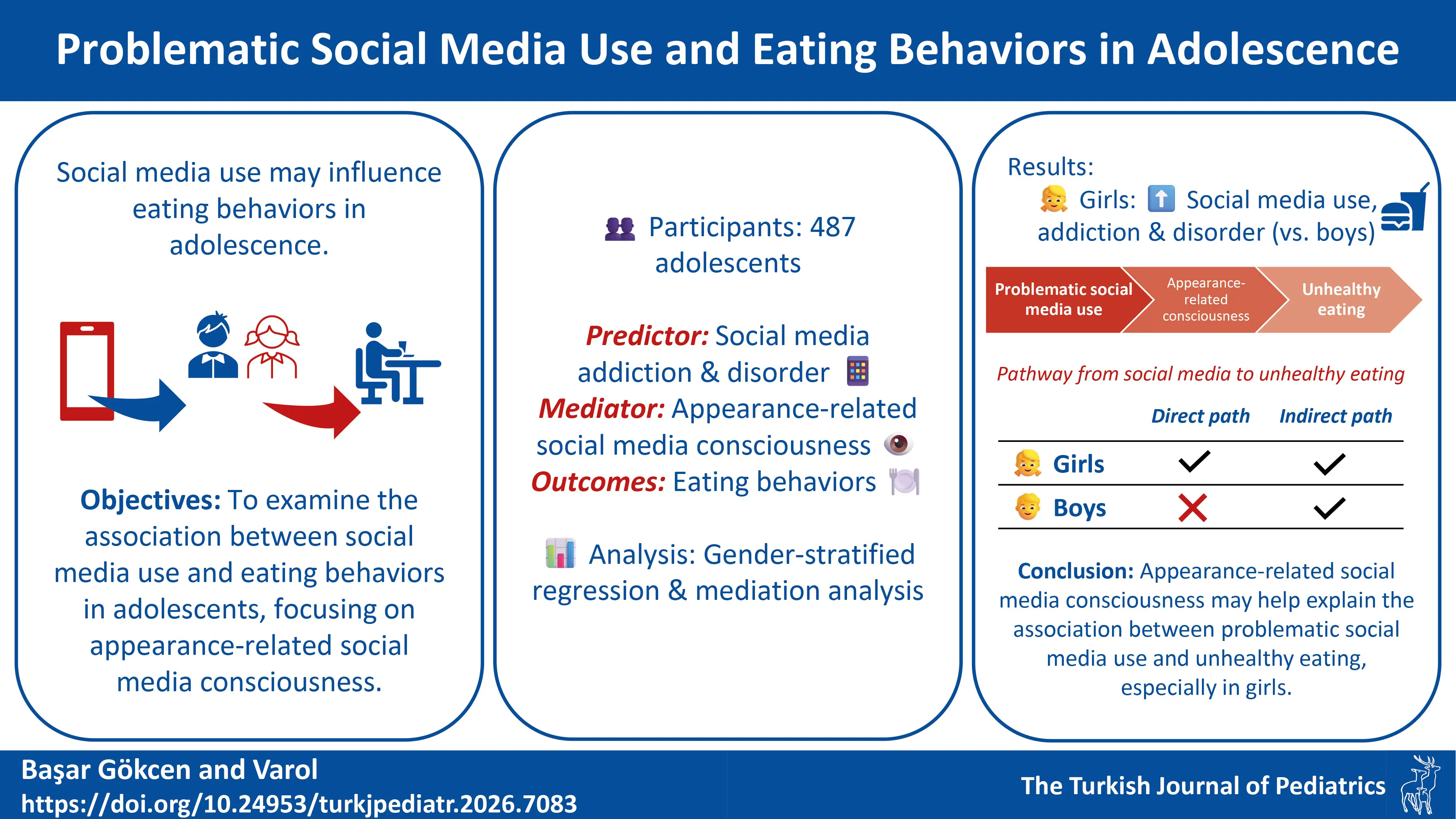
Graphical Abstract
Abstract
Background. Adolescence is a key period for shaping eating behaviors. Social media, central to identity formation and peer interaction, may influence diet through appearance-related mechanisms, with possible gender differences. This study investigated associations between social media use, addiction, and disorder with eating behaviors among Turkish adolescents, focusing on the mediating role of appearance-related social media consciousness.
Methods. A cross-sectional survey was conducted with 487 high school students aged 14–18 years in Manavgat, Antalya, Türkiye. Measures included the Social Media Addiction Scale for Adolescents (SMASA), Social Media Disorder Scale (SMDS), Appearance-Related Social Media Consciousness Scale (ASMC), Scale of Effects of Social Media on Eating Behavior (SESMEB) and Eating Habits Questionnaire for Adolescents (EHQA). Non-parametric tests were used due to non-normal data distributions; gender-stratified multiple regression models identified independent predictors of unhealthy eating habits. Simple mediation analyses (PROCESS Model 4) were performed to test indirect effects, as mediation models allow evaluation of whether ASMC explains the pathway between social media–related variables and unhealthy eating.
Results. Female adolescents reported longer daily social media use than males (median = 3.0 vs. 2.0 hours, p < 0.05). Across genders, healthy eating (EHQA) was negatively correlated with ASMC and SESMEB (all p < 0.01). Regression analyses showed that SMDS, ASMC, and SESMEB were significant predictors of unhealthy eating among females, while ASMC and SESMEB predicted unhealthy eating among males. Mediation analyses showed partial mediation in females in both models (SMASA → ASMC → EHQA; SMDS → ASMC → EHQA), with both direct and indirect effects being significant. In males, direct effects were non-significant, whereas indirect effects were significant.
Conclusions. Problematic social media use was associated with unhealthy eating among adolescents. In females, both direct and indirect (appearance-related social media consciousness-mediated) effects were observed, whereas in males the association was indirect only. Gender-specific psychological mechanisms should be considered in developing interventions to promote healthier digital engagement and eating behaviors in adolescence.
Keywords: adolescent behavior, body image, feeding behavior, social media
Introduction
Non-communicable diseases (NCDs) account for approximately 74% of global deaths each year, largely driven by modifiable behaviors such as unhealthy dietary patterns, which increase the risk of cardiovascular disease, diabetes, and cancer.1 To reduce this burden, the World Health Organization (WHO) and the United Nations Children’s Fund (UNICEF) emphasize the importance of promoting healthy eating early in life and recognize adolescence as a critical period for shaping long-term health trajectories.2
Adolescence is marked by rapid physical and neurocognitive development and increased sensitivity to social influences. It is also a formative stage when lifelong health behaviors, including dietary patterns, are established. Evidence links adolescent habits such as frequent ultra-processed food intake, irregular meals, and breakfast skipping to increased risk of non-communicable diseases in adulthood.3,4 While adolescence provides a critical window for establishing healthy dietary behaviors, this potential is increasingly challenged by a digitally mediated world. Social networking platforms now serve not only as channels of communication but also as key spaces for identity formation, peer interaction, and lifestyle modeling, including food-related decisions.5 This evolving digital and social landscape aligns with broader global vulnerabilities highlighted by the 2025 Second Lancet Commission on Adolescent Health and Wellbeing, which identifies health and optimal nutrition as one of the core domains of adolescent wellbeing. The Commission notes that adolescents are growing up amid the long-term impacts of coronavirus disease 2019, accelerating climate crises, geopolitical conflicts, and pervasive commercial and digital pressures, underscoring the need to strengthen healthy dietary behaviors during this developmental period.6
Social media may negatively affect adolescents’ healthy eating behaviors; developmentally vulnerable youth are particularly susceptible to persuasive digital food marketing, often delivered through appealing content by influencers and celebrities.7 As adolescents gain greater autonomy, they encounter food environments, both offline and online, that often promote convenience, impulsivity, and the consumption of calorie-dense, nutrient-poor products rather than supporting healthy choices. This tension is especially evident in digital spaces saturated with persuasive food content and peer-driven trends. Major global health organizations have called for policy interventions to limit the digital marketing of unhealthy foods to children and adolescents; in 2020, WHO, UNICEF, and the Lancet Commission jointly issued a global call to action to protect young people from exposure to harmful products such as tobacco, alcohol, and sugar-sweetened beverages.8,9 Additionally, the Lancet Commission on Adolescent Health and Wellbeing has identified adolescent nutrition as a “hidden crisis,” urging integrated strategies to monitor and improve young people’s eating behaviors worldwide.10,11 Recent national data indicate that 91.3% of Turkish children aged 6–15 use the internet and 66.1% specifically use social media, underlining the importance of addressing the potential impact of digital environments on adolescent eating behaviors in Türkiye as well.12
Although the link between social media use and adolescent eating behaviors is increasingly recognized, the psychosocial mechanisms remain unclear. Gender differences are evident; female adolescents tend to engage with appearance-focused content and are more sensitive to idealized body images, while male adolescents more often follow performance- or status-oriented content. These distinct patterns may influence dietary behaviors through different psychological pathways.13
This study aims to examine the associations between social media use, social media addiction, and social media disorder with eating behaviors among Turkish adolescents. In addition, the study investigates whether appearance-related social media consciousness serves as a mediating mechanism in these associations and whether these pathways differ by gender. Based on these aims and the existing theoretical and empirical literature, the following hypotheses were formulated:
H1. Higher levels of social media use, social media addiction, and social media disorder will be associated with poorer eating behaviors among adolescents.
H2. Appearance-related social media consciousness will mediate the associations between social media addiction and social media disorder and unhealthy eating behaviors.
H3. These direct and indirect pathways will differ by gender, with stronger appearance-related mechanisms expected among female adolescents.
Materials and Methods
Study design and ethical considerations
This cross-sectional study was conducted between February and May 2024 in one private and one public high school located in Manavgat, Antalya, Türkiye. Ethical approval was obtained from the appropriate institutional ethics committee (protocol-decision number: 230077-118, date: 20/10/2023) and permission to conduct the research was granted by the national educational authority. All study procedures were performed in accordance with the Declaration of Helsinki.
Sample size
An a priori power analysis was performed using G*Power 3.1 for a multiple regression model that included three theoretically relevant predictors (social media addiction, social media disorder, and appearance-related social media consciousness) and four additional predictors (age, body mass index [BMI] percentile, daily social media use, and social media’s influence on eating behaviors). Assuming a small-to-medium effect size (f² = 0.05), α = 0.05, and power = 0.95, the required minimum sample size was 348 participants. To account for potential non-response or unusable data, a 20% attrition margin was applied, increasing the target sample size to approximately 435 participants. The final analytic sample of 487 adolescents exceeded both the calculated minimum sample size and the attrition-adjusted target, demonstrating that the study was sufficiently powered for the planned correlation, regression, and mediation analyses.
Participants
The study included high school students aged 14–18 years from one private and one public high school. These two schools were intentionally selected to ensure representation of students from different socioeconomic backgrounds. In coordination with the administrations of both schools, suitable classes from the 9th, 10th, 11th, and 12th grades were included, and all students in these classes were invited to participate. However, no quota-based or proportional sampling procedures were implemented to ensure balanced participation across schools or classrooms; therefore, the distribution of participants reflects the naturally occurring class and school sizes.
Participation was voluntary, and students who were absent or declined participation were classified as non-respondents and were not replaced. A detailed information and voluntary participation form and the parental/guardian consent form were signed prior to participation. Participants were included if they were aged 14–18 years, enrolled in grades 9–12 of the study school, able to read and understand Turkish, present during the data collection session, and provided assent along with parental/guardian consent. Exclusion criteria encompassed diagnosed cognitive or learning disabilities preventing completion of the instruments, acute or significant chronic medical or psychological conditions that may interfere with assessments, and refusal, withdrawal, or absence on the survey day.
Data collection procedures and tools
Data collection was carried out through a structured, self-administered questionnaire distributed in classroom settings under the direct supervision of a trained researcher. The questionnaire included demographic items (age, sex), daily internet and social media use (hours/day), and nutrition-related non-scale items such as the number of main meals and snacks consumed per day. Daily screen time variables (internet use and social media use, hours/day) were obtained entirely through self-report, as participants manually stated their average usage; no device-based analytics (e.g., iOS Screen Time or Android Digital Wellbeing) were used. Height and weight were self-reported by students, and BMI percentiles were calculated using age- and sex-specific reference values based on the Centers for Disease Control and Prevention (CDC) growth charts, and weight-status categories were defined using CDC BMI percentile cut-offs: <5th percentile (underweight), 5th–<85th percentile (healthy weight), 85th–<95th percentile (overweight), ≥95th percentile (obesity), and ≥120% of the 95th percentile or ≥35 kg/m² (severe obesity).14
Social Media Addiction Scale for Adolescents (SMASA)
The SMASA was developed by Özgenel, Canpolat, and Ekşi (2019) to assess adolescents’ levels of problematic social media use. The scale consists of 9 items rated on a 5-point Likert scale ranging from 1 (never) to 5 (always), with total scores ranging from 9 to 45. Higher scores indicate greater addiction tendencies. The scale was constructed based on DSM-5 criteria for behavioral addictions and demonstrated a unidimensional structure. It explained 56.8% of the total variance, and the internal consistency coefficient (Cronbach’s alpha) was reported as 0.904, indicating excellent reliability.15
The Social Media Disorder Scale (SMDS)
The SMDS was originally developed by Van den Eijnden et al. (2016) and adapted into Turkish by Erzen and Odacı (2021) to measure problematic social media use among adolescents. The Turkish version consists of 13 dichotomous (yes/no) items grouped under three subdimensions: strain, insistence, and escape. Total scores range from 0 to 13, with higher scores indicating a greater risk of disordered social media use. Confirmatory factor analysis supported the three-factor structure, and the internal consistency coefficient (Cronbach’s alpha) was reported as 0.81, demonstrating acceptable reliability.16,17
The Appearance-Related Social Media Consciousness Scale (ASMC)
In this study, adolescents’ awareness and concern regarding their appearance on social media were assessed using the ASMC. The scale was originally developed by Choukas-Bradley et al. (2020) and later adapted into Turkish by Kurtuluş et al. and validated by Yıldırım et al. (2022). The ASMC consists of 13 items and employs a 7-point Likert scale, ranging from 1 (never) to 7 (always). Total scores range between 13 and 91, with higher scores indicating greater sensitivity to how one’s appearance is perceived in online contexts and a higher degree of investment in maintaining online attractiveness. Psychometric analysis of the Turkish version demonstrated strong internal consistency, with a reported Cronbach’s alpha coefficient of 0.89, indicating high reliability.18,19
The Scale of Effects of Social Media on Eating Behavior (SESMEB)
In this study, the SESMEB, developed by Keser et al. (2020), was employed to assess the influence of social media on adolescents’ eating behaviors. The SESMEB comprises 18 items, each rated on a 5-point Likert scale ranging from 1 (never) to 5 (always), yielding total scores between 18 and 90. Higher scores indicate a greater perceived impact of social media on eating behaviors. The SESMEB exhibited excellent internal consistency, with a Cronbach’s alpha coefficient of 0.928, indicating high reliability.20
The Eating Habits Questionnaire for Adolescents (EHQA)
In this study, adolescents’ eating behaviors were assessed using the EHQA, which was originally developed by Bester and Schnell (2004) based on the Eating Attitudes Test (EAT-26) and the Eating Behavior Test (EBT-16). The Turkish adaptation and validation of the scale were conducted by Yılmaz and Şişman (2021). The EHQA originally comprised 64 items rated on a 4-point Likert scale (1 = always to 4 = never), with higher scores reflecting healthier eating habits. Items with item–total correlations below 0.30 were removed stepwise, resulting in a 44-item scale with four factors: body image perception, external factors, nutrition, and exercise behavior. The internal consistency of the 44-item version was satisfactory, with a Cronbach’s alpha coefficient of 0.84.21,22
Statistical analysis
All statistical analyses were conducted using IBM SPSS Statistics version 30 (IBM Corp., Armonk, NY, USA) and the PROCESS macro (version 4.2) developed by Hayes. A two-tailed significance level of p < 0.05 was adopted.23
The distribution of continuous variables was examined using the Shapiro–Wilk test together with skewness / kurtosis statistics. Since these indicators suggested deviations from normality, nonparametric procedures were employed for group comparisons. Descriptive statistics were summarized as medians and interquartile ranges (IQR) for continuous variables, and as frequencies and percentages for categorical variables. Gender-based comparisons of age, BMI percentiles, internet use, social media use, social media–related scale scores and eating behavior outcomes were conducted using the Mann–Whitney U test. Differences in categorical BMI status (underweight, healthy weight, overweight, obesity) were examined using the chi-square (χ²) test. Spearman’s rho correlation coefficients were used to examine the associations among social media use and the total scores of SMASA, SMDS, ASMC, SESMEB, and EHQA, with results reported separately for female and male adolescents.
Multiple linear regression analyses were conducted to identify predictors of unhealthy eating habits, including social media use and the total scores of SMASA, SMDS, ASMC, and SESMEB, with analyses stratified by gender. Prior to the main analyses, data were examined for normality, linearity, and multicollinearity assumptions. Variance inflation factor (VIF) and tolerance values were inspected to assess multicollinearity, and all predictors fell within acceptable ranges (VIF = 1.03–2.20; tolerance = 0.45–0.96; acceptable thresholds: VIF < 5, tolerance > 0.40), indicating no multicollinearity concerns. Independent variables were selected a priori based on the theoretical framework and previous literature linking social media use and social media–related cognitive processes with adolescent eating behaviors. To ensure comparability across models, the same set of predictors was applied to both female and male adolescents, and no automated variable selection procedures (e.g., stepwise methods) were used. Values represent unstandardized regression coefficients (B), standardized coefficients (β), p-values, and 95% confidence intervals (CIs). Model performance was summarized using explained variance (R²) and the F statistic for overall model significance.
Simple mediation analyses were conducted using PROCESS Model 4 (Hayes, 2022) to examine whether Appearance-Related Social Media Consciousness mediated the associations of Social Media Addiction (Model 1) and Social Media Disorder (Model 2) with unhealthy eating habits. All mediation analyses were performed separately for female and male adolescents. For each model, unstandardized coefficients (B), standardized coefficients (β), p-values, and 95% CIs were reported. Indirect effects were estimated using 5,000 bootstrap resamples with bias-corrected CIs. Direct, indirect, and total effects, as well as model summary statistics (R² and F values), were provided. To enhance interpretability, the key mediation pathways for both Model 1 and Model 2 were visualized using path diagrams created via the Confluence diagramming interface.
Results
Gender-based comparisons of demographic, anthropometric, social media, and eating behavior variables are presented in Table I. A total of 487 adolescents participated in the study, including 245 females and 242 males. Age did not differ significantly between females and males (p = 0.088). BMI percentiles were higher among males (p < 0.001), and weight status categories differed significantly by gender (χ² = 21.911, p < 0.001). The number of main meals per day differed between groups (p < 0.001), whereas the number of snacks per day did not (p = 0.562). Daily internet use was similar across genders (p = 0.142). Daily social media use differed significantly between groups (p = 0.037). Females scored higher on SMASA, SMDS, ASMC, and SESMEB (all p < 0.001). Total EHQA scores also differed significantly between genders (p < 0.001). Gender-based differences were also observed across EHQA subscales, including body image perception (p < 0.001), external factors (p < 0.001), nutrition (p = 0.014), and exercise behavior (p < 0.001).
|
Values are presented as median (interquartile range) for continuous variables and n (%) for categorical variables (weight status). *Weight status categories were compared using the chi-square (χ²) test, and the p values for the comparisons of other variables were derived from the Mann–Whitney U test (for continuous variables). ASMC: Appearance-Related Social Media Consciousness, EHQA: Eating Habits Questionnaire for Adolescents, SESMEB: Scale of Effects of Social Media on Eating Behavior, SMASA: Social Media Addiction Scale for Adolescents, SMDS: Social Media Disorder Scale. |
|||
| Table I. Gender-based comparison of demographic, anthropometric, social media, and eating behavior variables | |||
|
|
|
|
|
| Age, years |
|
|
|
| BMI percentiles |
|
|
|
| Weight status |
|
||
| Underweight |
|
|
|
| Healthy weight |
|
|
|
| Overweight |
|
|
|
| Obesity |
|
|
|
| Number of main meals per day |
|
|
|
| Number of snacks per day |
|
|
|
| Internet use, hours/day |
|
|
|
| Social media use, hours/day |
|
|
|
| SMASA, total score |
|
|
|
| SMDS, total score |
|
|
|
| ASMC, total score |
|
|
|
| SESMEB, total score |
|
|
|
| EHQA, total score |
|
|
|
| EHQA, body image perception |
|
|
|
| EHQA, external factors |
|
|
|
| EHQA, nutrition |
|
|
|
| EHQA, exercise behavior |
|
|
|
Gender-stratified correlations are presented in Table II. Among females, social media use, SMASA, SMDS, ASMC, and SESMEB were all positively correlated with one another (all p < 0.01), and each showed negative correlations with EHQA (p < 0.05 to p < 0.01). Among males, similar positive associations were observed among social media use, SMASA, SMDS, ASMC, and SESMEB (all p < 0.01), while EHQA was negatively correlated with SMASA, SMDS, ASMC, and SESMEB (all p < 0.01), but not with social media use.
|
Upper triangle (above the diagonal) shows results for female adolescents; lower triangle (below the diagonal) shows results for male adolescents. *p < 0.05; **p < 0.01 (Spearman’s rho correlation) ASMC: Appearance-Related Social Media Consciousness, EHQA: Eating Habits Questionnaire for Adolescents, SESMEB: Scale of Effects of Social Media on Eating Behavior, SMASA: Social Media Addiction Scale for Adolescents, SMDS: Social Media Disorder Scale, SMU: social media use. |
||||||
| Table II. Correlations between social media use and eating behavior by gender | ||||||
|
|
|
|
|
|
|
|
| SMU, hours/day |
|
|
|
|
|
|
| SMASA, total score |
|
|
|
|
|
|
| SMDS, total score |
|
|
|
|
|
|
| ASMC, total score |
|
|
|
|
|
|
| SESMEB, total score |
|
|
|
|
|
|
| EHQA, total score |
|
|
|
|
|
|
Multiple regression analyses examining predictors of unhealthy eating habits by gender are summarized in Table III. For female adolescents, BMI percentile, SMDS, ASMC, and SESMEB were significant predictors of EHQA scores (all p < 0.01), while age, SMU, and SMASA were not significant. The overall model was significant (R² = 0.362, F = 19.175). For male adolescents, BMI percentile, ASMC, and SESMEB were significant predictors (all p < 0.001), whereas age, SMU, SMASA, and SMDS were not. The overall model was significant (R² = 0.313, F = 15.246).
|
Values represent unstandardized regression coefficients (B), standardized coefficients (β), p-values, and 95% confidence intervals (CIs). Separate multiple linear regression models were conducted for female and male adolescents. R² represents the coefficient of determination, and F indicates the overall significance of the regression model. Regression assumptions—including residual normality, homoscedasticity, and multicollinearity—were assessed prior to analysis. All tolerance and VIF values fell within acceptable limits, confirming the absence of multicollinearity. ASMC: Appearance-Related Social Media Consciousness, BMI: body mass index, SESMEB: Scale of Effects of Social Media on Eating Behavior, SMASA: Social Media Addiction Scale for Adolescents, SMDS: Social Media Disorder Scale, SMU: social media use, VIF: variance inflation factor. |
||||||||||
| Table III. Multiple regression analysis of predictors of unhealthy eating habits by gender | ||||||||||
| Predictors |
|
|
||||||||
|
|
|
|
|
|
|
|
|
|||
| Age, years |
|
|
|
|
|
|
|
|
|
|
| BMI percentile |
|
|
|
|
|
|
|
|
|
|
| SMU, hours/day |
|
|
|
|
|
|
|
|
|
|
| SMASA, total score |
|
|
|
|
|
|
|
|
|
|
| SMDS, total score |
|
|
|
|
|
|
|
|
|
|
| ASMC, total score |
|
|
|
|
|
|
|
|
|
|
| SESMEB, total score |
|
|
|
|
|
|
|
|
|
|
| Model Summary Statistics: |
|
|
||||||||
Mediation analyses examining the indirect effects of SMASA and SMDS on unhealthy eating habits through appearance-related social media consciousness are presented in Table IV and illustrated in Fig. 1 and Fig. 2, which visually depict these mediation pathways, showing standardized and unstandardized coefficients, significance levels, and the distinction between full and partial mediation across female (pink) and male (blue) adolescents.
| Values represent unstandardized path coefficients (B), standardized coefficients (β) when available, p-values, and 95% confidence intervals (CIs). Some β and p-values are not reported ("—" or “sign.”) because PROCESS Model 4 does not compute standardized coefficients or exact significance levels for specific indirect paths under bootstrapping procedures. R² represents the coefficient of determination and F indicates the overall model significance. Predictors: Social Media Addiction and Social Media Disorder; Mediator: Appearance-Related Social Media Consciousness; Outcome: Unhealthy Eating Habits. | ||||||||||
| Table IV. Mediation models of social media addiction / disorders and unhealthy eating habits via appearance-related social media consciousness | ||||||||||
| Model / Paths |
|
|
||||||||
|
|
|
|
|
|
|
|
|
|||
| MODEL 1: Social Media Addiction → Unhealthy Eating Habits | ||||||||||
| Social Media Addiction → Mediator |
|
|
|
|
|
|
|
|
|
|
| Mediator → Unhealthy Eating Habits |
|
|
|
|
|
|
|
|
|
|
| Total Effect |
|
|
|
|
|
|
|
|
|
|
| Direct Effect |
|
|
|
|
|
|
|
|
|
|
| Indirect Effect |
|
|
|
|
|
|
|
|
|
|
| Total Model Summary Statistics: | R2: 0.101, F: 27.377 | R2: 0.031, F: 7.740 | ||||||||
| MODEL 2: Social Media Disorder → Unhealthy Eating Habits | ||||||||||
| Social Media Disorder → Mediator |
|
|
|
|
|
|
|
|
|
|
| Mediator → Unhealthy Eating Habits |
|
|
|
|
|
|
|
|
|
|
| Total Effect |
|
|
|
|
|
|
|
|
|
|
| Direct Effect |
|
|
|
|
|
|
|
|
|
|
| Indirect Effect |
|
|
|
|
|
|
|
|
|
|
| Total Model Summary Statistics: |
|
|
||||||||
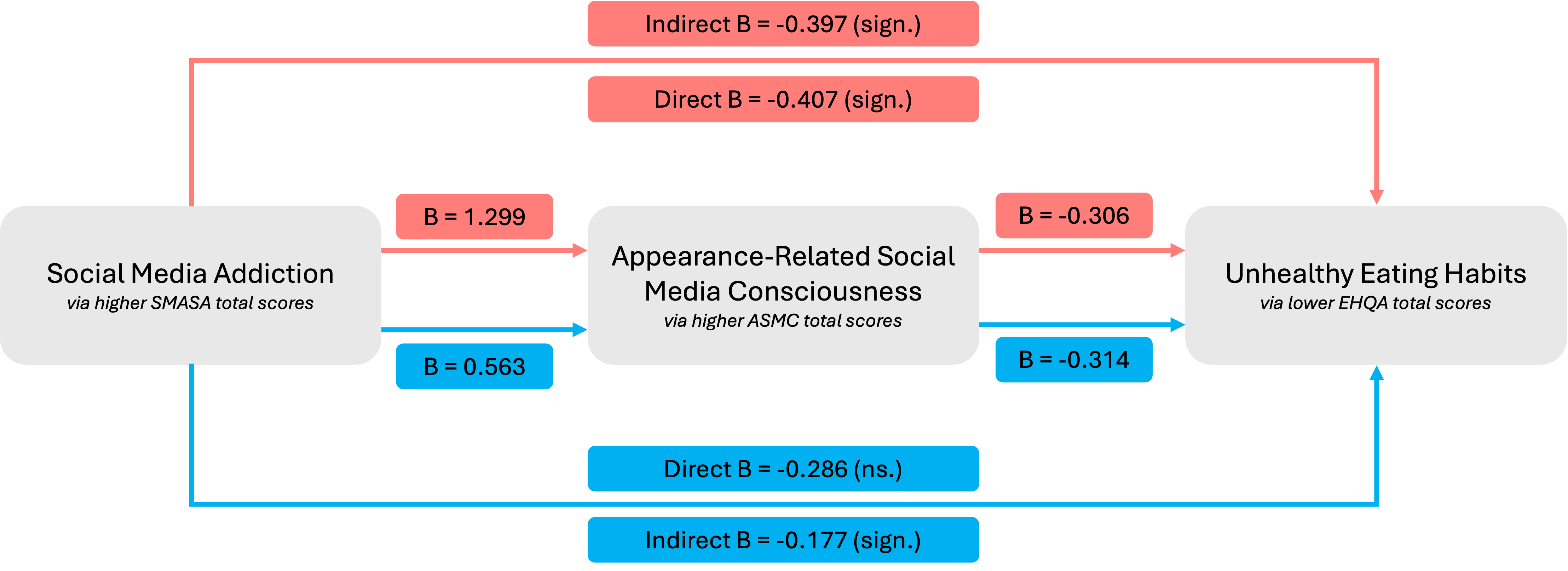
ASMC: Appearance-Related Social Media Consciousness, EHQA: Eating Habits Questionnaire for Adolescents, SMDS: Social Media Disorder Scale.
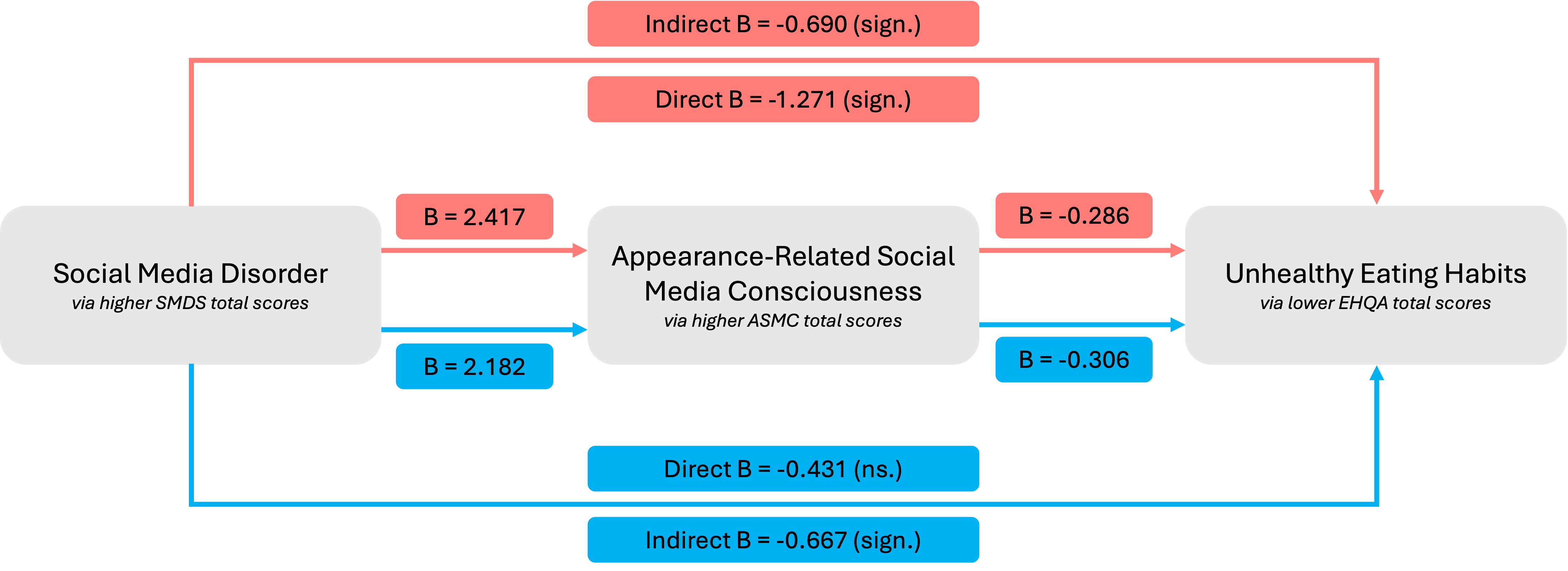
ASMC: Appearance-Related Social Media Consciousness, EHQA: Eating Habits Questionnaire for Adolescents, SMDS: Social Media Disorder Scale.
Model 1 (SMASA → EHQA via ASMC): For females, SMASA significantly predicted ASMC (p < 0.001), and ASMC significantly predicted EHQA (p < 0.001). The total effect of SMASA on EHQA was significant (p < 0.001), and the indirect effect (95% CI: –0.582 to –0.236) was also significant. The direct effect remained significant (p = 0.010), indicating partial mediation. The model accounted for 10.1% of the variance (R² = 0.101, F = 27.377). For males, SMASA significantly predicted ASMC (p = 0.002), and ASMC significantly predicted EHQA (p < 0.001). The total effect was significant (p = 0.006), as was the indirect effect (95% CI: –0.325 to –0.050), while the direct effect was non-significant (p = 0.076), indicating full mediation. The model explained 3.1% of the variance (R² = 0.031, F = 7.740).
Model 2 (SMDS → EHQA via ASMC): For females, SMDS significantly predicted ASMC (p < 0.001), and ASMC significantly predicted EHQA (p < 0.001). Both the total effect (p < 0.001) and indirect effect (95% CI: –1.045 to –0.395) were significant, while the direct effect remained significant (p < 0.001), indicating partial mediation. The model explained 14.4% of the variance (R² = 0.144, F = 40.788). For males, SMDS significantly predicted ASMC (p < 0.001), and ASMC significantly predicted EHQA (p < 0.001). The total effect (p = 0.001) and indirect effect (95% CI: –0.983 to –0.385) were significant, whereas the direct effect was non-significant (p = 0.218), indicating full mediation. The model accounted for 4.2% of the variance (R² = 0.042, F = 7.827).
Discussion
This study provides important insights into gender differences in the associations between social media use and adolescents’ eating behaviors. Our findings show that female adolescents report significantly higher levels of social media use, addiction, and disorder compared to males, and these characteristics are linked to less healthy eating patterns. Appearance-related social media consciousness emerged as both a negative correlate of healthy eating and a mediating factor in the statistical pathways connecting social media addiction and disorder with eating behaviors. Notably, the mediating role of appearance-related consciousness differed by gender.
Although overall internet use was similar across genders, female adolescents reported higher daily social media use as well as higher levels of social media addiction and disorder compared to male adolescents. This pattern aligns with our findings and is consistently supported by previous research.24-27 Evidence from large-scale international datasets further reinforces this trend. For instance, the Health Behaviour in School-Aged Children study conducted in collaboration with the WHO across 42 countries reports that female adolescents exhibit markedly higher rates of intensive and problematic social media use.28 In parallel, a longitudinal four-wave study spanning 18 months found that female adolescents consistently maintained higher levels of active social media use at all measurement points compared to their male counterparts.29 Moreover, results from the Generation R Study showed that female adolescents were 36–58% more likely than males to be social media users, highlighting a persistent and robust gender difference in digital engagement patterns.30
Appearance-based social media consciousness refers to individuals’ ongoing preoccupation with how they appear to others on social media and is strongly associated with body dissatisfaction.18 Consistent with this conceptualization, female adolescents in our study demonstrated markedly higher levels of appearance-related social media preoccupation. This preoccupation was positively associated with social media use duration, addiction, and disorder; however, the association with use duration emerged only among girls, underscoring a gender-specific pattern. These results are consistent with prior research demonstrating that girls tend to engage more intensively with appearance-focused social media content, and are additionally supported by studies linking social appearance anxiety with social media addiction.31-33 Such patterns can be interpreted through objectification theory, which posits that gendered socialization fosters an externalized perspective of the body, particularly among female adolescents. This self-objectification leads individuals to perceive themselves as objects continually evaluated by others. Social media platforms, where others’ gaze is perpetually present, facilitate this process by enabling content curation, sharing, and peer feedback in the form of likes and comments, thus reinforcing appearance-focused evaluations.34 Consequently, the greater salience of social media dynamics among female adolescents may be associated with increased appearance-related awareness, reflecting a potential reciprocal alignment between social media engagement and body image concerns rather than a directional causal process.35,36 These associations can also be explained through the social comparison theory. Accordingly, female adolescents are prone to upward comparisons on social media—contrasting themselves with those perceived as superior—and internalizing the appearance ideals these figures portray. This process is linked to negative body image and heightened body dissatisfaction among female adolescents.37 Consistently, Ioannou et al.36 reported that increased social media use is associated with greater body dissatisfaction, potentially due to intensified cognitive preoccupation with appearance in digital contexts.38 Notably, findings from recent research also show that Turkish girls report lower satisfaction with their bodies compared to boys, further supporting this gender-specific vulnerability.
Adolescence is a period when eating behaviors become increasingly complex, with social media–related factors adding to body dissatisfaction.39 Gender differences emerge not only in social media use but also in its impact on eating behaviors, highlighting the importance of examining psychosocial mediators from a gender-specific perspective.20 Compared to males, female adolescents experience the impact of social media on eating behaviors more strongly, a finding consistent with previous literature.40-42 Among female adolescents, longer social media use appears to be associated with less healthy eating behaviors. Spending more than two hours per day on social media has been associated with higher SESMEB scores compared to spending less time, but this finding has been demonstrated only in female students.40,42 This result is consistent with the present study, which showed a positive association between social media use and SESMEB scores only among female adolescents.
Although numerous studies have demonstrated the association between social media use and eating behaviors, mediators have typically focused on body dissatisfaction.43-45 During adolescence—a period marked by heightened appearance sensitivity and identity formation—exposure to social media content such as fitspiration or thinspiration contributes to the internalization of unrealistic beauty ideals and the normalization of restrictive eating behaviors. These processes appear particularly pronounced among female adolescents who interact more frequently with beauty- and diet-related content.46 Female adolescents also share appearance- and food-focused social media content more than males, which conceptually links to eating behaviors.47Appearance-based rejection sensitivity has also been identified as a mediator in the relationship between social media addiction and disordered eating.45 Moreover, recent multi-path mediation research has highlighted that excessive social media use can predict both restrained eating and emotional overeating through appearance and weight esteem. While these indirect pathways emerged for both outcomes, gender differences were observed: appearance esteem mediated the link between social media use and emotional overeating only among females, whereas the pathway to restrained eating did not differ by gender.48 In another serial mediation framework, Foster et al.49 demonstrated that Snapchat use was associated with greater appearance-based social comparisons, which in turn were linked to a stronger drive for thinness and to patterns of problematic, compensatory eating behaviors. This further supports the notion that social media influences eating behaviors primarily through appearance-oriented cognitive mechanisms rather than through direct exposure alone.49 Our findings align with this literature. Mediation analyses revealed that ASMC significantly mediated the relationship between social media addiction and disorder and eating behaviors among female adolescents, while for male adolescents, this mediation was only partially significant and limited to social media disorder. Direct effects were significant only among female adolescents. Additionally, ASMC mediated the association between social media use duration and eating behaviors in female but not in male adolescents. This pattern is consistent with evidence from Zaharia and Gonta50, who identified similar appearance-based mediating pathways connecting social media engagement to compensatory eating behaviors.
The mechanisms linking social media participation, including use, addiction, and disorder, to eating behaviors can be explained through several psychological and sociocultural frameworks. Social Cognitive Theory suggests that adolescents internalize body ideals and dietary patterns via observational learning and reinforcement, amplified by constant exposure to peers, influencers, and digital celebrities.51 Similarly, the Tripartite Influence Model shows how media, peers, and family jointly shape body image concerns and disordered eating, with social media merging these influences in a highly visual, interactive environment.52 Uses and Gratifications Theory further explains that adolescents turn to social media to fulfill needs for self-expression, validation, and social comparison, making them more receptive to appearance- and food-related content.53 Interactive features such as likes, comments, and filters intensify feedback loops that reward idealized appearance and restrictive eating, fostering emotional vulnerability and maladaptive behaviors like emotional eating, food restriction, or bingeing. In the context of influencer-driven digital food marketing, these processes normalize impulsive, unhealthy eating habits among youth and enable the rapid peer-driven spread of behaviors through the contagion effect.54 Moreover, body dissatisfaction, long recognized as a key predictor of disordered eating, has become increasingly salient on visual platforms. The Perfect Storm framework posits that these interactive features intersect with developmental vulnerabilities, such as heightened peer sensitivity and identity formation, creating a high-risk environment for body image concerns and maladaptive eating.55 Excessive social media engagement and addiction can further disrupt adolescents’ biological, psychological, and social functioning, undermining healthy lifestyle habits.56
Our findings indicate that when compared with females, male adolescents appear more advantaged in adopting healthy eating behaviors. Although previous literature has generally associated male gender with lower diet quality, cultural differences may influence these outcomes and should be considered.57-58 A recent systematic review highlighted that the determinants of dietary habits differ by gender: females are more strongly influenced by external motivators (e.g., the ideal of thinness), whereas males are more driven by internal motivators (e.g., pleasure, improving physical performance).59 In Türkiye, research has shown that female adolescents report higher levels of emotional and external eating, which are associated with lower mindful eating.60 Additionally, the prevalence of disordered eating behaviors has been found to be higher among female adolescents than male adolescents.61
This study has several limitations. First, its cross-sectional design prevents causal inferences regarding the associations among social media use, appearance-related mechanisms, and eating behaviors. Second, all behavioral variables including screen time, anthropometric indicators, and eating habits were self-reported, which may introduce recall bias and common-method variance. Third, although one private and one public high school were selected to reflect socioeconomic diversity, the study was conducted within a single district and participation was not balanced across schools or classrooms, potentially limiting representativeness. Fourth, because students were nested within classes and schools, their responses may not have been fully independent, and clustering effects could have influenced the precision of regression estimates. Fifth, although the models included key social media variables, appearance-related social media consciousness, and basic demographics (age, BMI percentile, gender), other important confounders such as socioeconomic status, parental education, physical activity, sleep, and mental health were not measured and therefore could not be controlled for. Finally, the mediation analyses relied on unstandardized PROCESS outputs, which do not report standardized indirect effects or p-values, limiting the granularity of interpretation. Future studies should incorporate longitudinal designs, objective digital-behavior metrics, and more comprehensive confounder assessments to strengthen causal inference.
In conclusion, this study underscores the pivotal role of appearance-related social media consciousness in shaping the pathways through which various social media dynamics, including use, addiction, and disorder, shape adolescents’ tendencies toward both healthy and unhealthy eating behaviors. Notably, these mechanisms were more pronounced among female adolescents, highlighting gender-specific vulnerabilities in the digital environment. Our findings emphasize the need for tailored interventions that promote media literacy, critical engagement with appearance-focused online content, and body awareness to support healthier digital habits and eating patterns. Furthermore, the results point to important implications for policymakers and educators, who should consider regulating digital food and appearance-related marketing and developing gender-sensitive prevention programs to mitigate the adverse effects of social media on adolescent health.
Ethical approval
This study was approved by the Muğla Sıtkı Koçman University Medical and Health Sciences Ethics Committee with the date 20/10/2023 and numbered 230077-118 (protocol-decision). Additionally, permission to conduct the research was granted by the Turkish Ministry of National Education on 13/11/2023. Participation was voluntary, and informed consent was obtained from all students prior to data collection.
Source of funding
The authors declare that the study was supported by the TÜBİTAK 2209-A Research Project Support Program for Undergraduate Students [TUBITAK2209A-1919B012222077].
Conflict of interest
The authors declare that there is no conflict of interest.
References
- Goel S, Verma M, Mohapatra A, Popovic S. Editorial: Raising awareness around trends in noncommunicable diseases and their risk factors to promote global prevention and control. Front Public Health 2025; 13: 1553630. https://doi.org/10.3389/fpubh.2025.1553630
- United Nations Children’s Fund. Programme guidance for early life prevention of non-communicable diseases (NCDs): Promoting health and preventing NCDs at every stage of life. 2019. Available at: https://uniatf.who.int/docs/librariesprovider22/default-document-library/unicef-programme-guidance-for-early-life-prevention-of-non-communicable-diseases.pdf (Accessed on April 20, 2025).
- Bodega P, de Cos-Gandoy A, Fernández-Alvira JM, Fernández-Jiménez R, Moreno LA, Santos-Beneit G. Body image and dietary habits in adolescents: a systematic review. Nutr Rev 2023; 82: 104-127. https://doi.org/10.1093/nutrit/nuad044
- Liu KS, Chen JY, Sun KS, Tsang JP, Ip P, Lam CL. Adolescent knowledge, attitudes and practices of healthy eating: findings of qualitative ınterviews among Hong Kong families. Nutrients 2022; 14: 2857. https://doi.org/10.3390/nu14142857
- Odgers CL, Jensen MR. Annual research review: adolescent mental health in the digital age: facts, fears, and future directions. J Child Psychol Psychiatry 2020; 61: 336-348. https://doi.org/10.1111/jcpp.13190
- Baird S, Choonara S, Azzopardi PS, et al. A call to action: the second Lancet Commission on adolescent health and wellbeing. Lancet 2025; 405: 1945-2022. https://doi.org/10.1016/S0140-6736(25)00503-3
- Jaruga-Sękowska S, Staśkiewicz-Bartecka W, Woźniak-Holecka J. The ımpact of social media on eating disorder risk and self-esteem among adolescents and young adults: a psychosocial analysis in ındividuals aged 16-25. Nutrients 2025; 17: 219. https://doi.org/10.3390/nu17020219
- Théodore FL, López-Santiago M, Cruz-Casarrubias C, Mendoza-Pablo PA, Barquera S, Tolentino-Mayo L. Digital marketing of products with poor nutritional quality: a major threat for children and adolescents. Public Health 2021; 198: 263-269. https://doi.org/10.1016/j.puhe.2021.07.040
- Clark H, Coll-Seck AM, Banerjee A, et al. A future for the world’s children? A WHO-UNICEF-Lancet Commission. Lancet 2020; 395: 605-658. https://doi.org/10.1016/S0140-6736(19)32540-1
- Jeong H, Shin K. How does adolescents’ usage of social media affect their dietary satisfaction? Int J Environ Res Public Health 2022; 19: 3621. https://doi.org/10.3390/ijerph19063621
- The Lancet Child Adolescent Health. The hidden crisis of adolescent nutrition. Lancet Child Adolesc Health 2022; 6: 1. https://doi.org/10.1016/S2352-4642(21)00381-3
- Turkish Statistical Institute (TÜİK). Children’s use of ınformation technologies - 2024 report. Ankara: TÜİK; 2024. Available at: https://data.tuik.gov.tr /Bulten/Index?p=Cocuklarda-Bilisim-Teknolojileri-Kullanim-Arastirmasi-2024-53638 (Accessed April 20, 2025).
- Winds K, Aebi M, Plattner B. Problematic internet use among adolescent male and female psychiatric inpatients: a gender perspective. Child Psychiatry Hum Dev 2024; 55: 497-509. https://doi.org/10.1007/s10578-022-01408-6
- Centers for Disease Control and Prevention. Child and teen BMI calculator and categories. Available at: https://www.cdc.gov/bmi/child-teen-calculator/index.html (Accessed on April 20, 2025).
- Özgenel M, Canpolat Ö, Ekşi H. Social media addiction scale for adolescents: validity and reliability study. Addicta: The Turkish Journal on Addictions 2019; 6: 631-664. https://doi.org/10.15805/addicta.2019.6.3.0086
- Van den Eijnden RJ, Lemmens JS, Valkenburg PM. The social media disorder scale. Comput Human Behav 2016; 61: 478-487. https://doi.org/10.1016/j.chb.2016.03.038
- Erzen E, Odacı H. Sosyal medya bozukluğu ölçeği: Türkçe uyarlama çalışması. Dokuz Eylül Üniversitesi Buca Eğitim Fakültesi Dergisi 2021; 51: 520-535. https://doi.org/10.53444/deubefd.776333
- Choukas-Bradley S, Nesi J, Widman L, Galla BM. The Appearance-related social media consciousness scale: development and validation with adolescents. Body Image 2020; 33: 164-174. https://doi.org/10.1016/j.bodyim.2020.02.017
- Yıldırım H, Kalay Usta T, Kurtuluş E. The Turkish adaptation of the adolescents’ appearance-related social media consciousness scale: the validity and reliability study. e-Kafkas Journal of Educational Research 2022; 9(2): 545-563. https://doi.org/10.30900/kafkasegt.974005
- Keser A, Bayındır-Gümüş A, Kutlu H, Öztürk E. Development of the scale of effects of social media on eating behaviour: a study of validity and reliability. Public Health Nutr 2020; 23: 1677-1683. https://doi.org/10.1017/S1368980019004270
- Bester G, Schnell N. Endogenous factors that relate to the eating habits of adolescents. S Afr J Educ 2004; 24(3): 189-193. https://doi.org/10.4314/saje.v24i3.24987
- Yılmaz AG. Reliability and validity of eating habits questionnaire for adolescent [master’s thesis]. İstanbul, Türkiye: Marmara University, Institute of Health Sciences, Department of Nursing; 2021.
- Hayes AF. Introduction to mediation, moderation, and conditional process analysis: a regression-based approach. New York, NY: The Guilford Press; 2013.
- Yurtdaş-Depboylu G, Kaner G, Özçakal S. The association between social media addiction and orthorexia nervosa, eating attitudes, and body image among adolescents. Eat Weight Disord 2022; 27: 3725-3735. https://doi.org/10.1007/s40519-022-01521-4
- Wong SL, King N, Gariépy G, et al. Adolescent social media use and its association with relationships and connections: Canadian health behaviour in school-aged children, 2017/2018. Health Rep 2022; 33: 14-23. https://doi.org/10.25318/82-003-x202201200002-eng
- Svensson R, Johnson B, Olsson A. Does gender matter? The association between different digital media activities and adolescent well-being. BMC Public Health 2022; 22: 273. https://doi.org/10.1186/s12889-022-12670-7
- Foubister C, Jago R, Sharp SJ, van Sluijs EMF. Time spent on social media use and BMI z-score: a cross-sectional explanatory pathway analysis of 10798 14-year-old boys and girls. Pediatr Obes 2023; 18: e13017. https://doi.org/10.1111/ijpo.13017
- Boniel-Nissim M, Bersia M, Canale N, et al. Different categories of social media use and their association with body image among adolescents in 42 countries. Int J Public Health 2024; 69: 1606944. https://doi.org/10.3389/ijph.2024.1606944
- Fredrick SS, Nickerson AB, Livingston JA. Adolescent social media use: pitfalls and promises in relation to cybervictimization, friend support, and depressive symptoms. J Youth Adolesc 2022; 51: 361-376. https://doi.org/10.1007/s10964-021-01561-6
- You YY, Yang-Huang J, Raat H, van Grieken A. Factors of heavy social media use among 13-year-old adolescents on weekdays and weekends. World J Pediatr 2023; 19: 378-389. https://doi.org/10.1007/s12519-023-00690-1
- Maheux AJ, Roberts SR, Nesi J, Widman L, Choukas-Bradley S. Longitudinal associations between appearance-related social media consciousness and adolescents’ depressive symptoms. J Adolesc 2022; 94: 264-269. https://doi.org/10.1002/jad.12009
- Sarman A, Çiftci N. Relationship between social media addiction and appearance-related social media consciousness in Turkish adolescents. J Pediatr Nurs 2024; 76: 99-105. https://doi.org/10.1016/j.pedn.2024.02.008
- Caner N, Efe YS, Başdaş Ö. The contribution of social media addiction to adolescent LIFE: Social appearance anxiety. Curr Psychol 2022; 41: 8424-8433. https://doi.org/10.1007/s12144-022-03280-y
- Kahalon R, Klein V. Self-objectification and sexuality: a systematic scoping review. J Sex Res 2025; 62: 1722-1743. https://doi.org/10.1080/00224499.2025.2552910
- Tie B, Yang X, Qiu J. Validation of the appearance-related social media consciousness scale with Chinese adolescents and young adults. Body Image 2024; 48: 101677. https://doi.org/10.1016/j.bodyim.2023.101677
- Saunders JF, Nutter S, Waugh R, Hayden KA. Testing body-related components of objectification theory: a meta-analysis of the relations between body shame, self-objectification, and body dissatisfaction. Body Image 2024; 50: 101738. https://doi.org/10.1016/j.bodyim.2024.101738
- Bonfanti RC, Melchiori F, Teti A, et al. The association between social comparison in social media, body image concerns and eating disorder symptoms: a systematic review and meta-analysis. Body Image 2025; 52: 101841. https://doi.org/10.1016/j.bodyim.2024.101841
- Ioannou M, Tzani C, Price P, Walker F, Williams TJV, Fumagalli A. #NoFilter: the impact of social media body dysmorphic disorder in adults. Mental Health Science 2024; 2: e89. https://doi.org/10.1002/mhs2.89
- Mohsenpour MA, Karamizadeh M, Barati-Boldaji R, Ferns GA, Akbarzadeh M. Structural equation modeling of direct and indirect associations of social media addiction with eating behavior in adolescents and young adults. Sci Rep 2023; 13: 3044. https://doi.org/10.1038/s41598-023-29961-7
- Dumlu Bilgin G, Keküllüoğlu Tan M, Yıldırım GA, Sarıgül S, Güzel D, Sökeli N. Elucidating the role of social media usage on eating behavior and hedonic hunger in college students: a cross-sectional design. Curr Psychol 2024; 43: 27613–27622. https://doi.org/10.1007/s12144-024-06350-5
- Cheikh Ismail L, Osaili TM, Naja F, et al. The association of social media with dietary behaviors among adults in the United Arab Emirates. Heliyon 2024; 10: e35574. https://doi.org/10.1016/j.heliyon.2024.e35574
- Eşer Durmaz S, Keser A, Tunçer E. Effect of emotional eating and social media on nutritional behavior and obesity in university students who were receiving distance education due to the COVID-19 pandemic. Z Gesundh Wiss 2022: 1-10. https://doi.org/10.1007/s10389-022-01735-x
- Xiang K, Kong F. Passive social networking sites use and disordered eating behaviors in adolescents: the roles of upward social comparison and body dissatisfaction and its sex differences. Appetite 2024; 198: 107360. https://doi.org/10.1016/j.appet.2024.107360
- Dopelt K, Houminer-Klepar N. The impact of social media on disordered eating: insights from Israel. Nutrients 2025; 17: 180. https://doi.org/10.3390/nu17010180
- Imtiaz H, Malik N. Social media addiction and disordered eating behavior among university students: appearance based rejection sensitivity as mediator. J Asian Dev 2024; 13: 853-861. https://doi.org/10.62345/jads.2024.13.1.71
- Suhag K, Rauniyar S. Social media effects regarding eating disorders and body image in young adolescents. Cureus 2024; 16: e58674. https://doi.org/10.7759/cureus.58674
- Wilksch SM, O’Shea A, Ho P, Byrne S, Wade TD. The relationship between social media use and disordered eating in young adolescents. Int J Eat Disord 2020; 53: 96-106. https://doi.org/10.1002/eat.23198
- Murray M, Maras D, Goldfield GS. Excessive time on social networking sites and disordered eating behaviors among undergraduate students: appearance and weight esteem as mediating pathways. Cyberpsychol Behav Soc Netw 2016; 19: 709-715. https://doi.org/10.1089/cyber.2016.0384
- Foster S, O’Mealey M, Farmer C, Carvallo M. The impact of snapchat usage on drunkorexia behaviors in college women. J Am Coll Health 2022; 70: 864-874. https://doi.org/10.1080/07448481.2020.1775609
- Zaharia A, Gonța I. The healthy eating movement on social media and its psychological effects on body image. Front Nutr 2024; 11: 1474729. https://doi.org/10.3389/fnut.2024.1474729
- Bandura A. Social cognitive theory of mass communication. In: Media Effects: Advances in Theory and Research. Milton Park: Routledge; 2009: 110-140. https://doi.org/10.4324/9780203877111-12
- Fardouly J, Vartanian LR. Social media and body image concerns: current research and future directions. Curr Opin Psychol 2016; 9: 1-5. https://doi.org/10.1016/j.copsyc.2015.09.005
- Sidani JE, Shensa A, Hoffman B, Hanmer J, Primack BA. The association between social media use and eating concerns among US young adults. J Acad Nutr Diet 2016; 116: 1465-1472. https://doi.org/10.1016/j.jand.2016.03.021
- Chung A, Vieira D, Donley T, et al. Adolescent peer influence on eating behaviors via social media: scoping review. J Med Internet Res 2021; 23: e19697. https://doi.org/10.2196/19697
- Choukas-Bradley S, Roberts SR, Maheux AJ, Nesi J. The perfect storm: a developmental-sociocultural framework for the role of social media in adolescent girls’ body image concerns and mental health. Clin Child Fam Psychol Rev 2022; 25: 681-701. https://doi.org/10.1007/s10567-022-00404-5
- Mushtaq T, Ashraf S, Hameed H, et al. Prevalence of eating disorders and their association with social media addiction among youths. Nutrients 2023; 15: 4687. https://doi.org/10.3390/nu15214687
- Fenton S, Ashton LM, Lee DCW, Collins CE. Gender differences in diet quality and the association between diet quality and BMI: an analysis in young Australian adults who completed the Healthy Eating Quiz. J Hum Nutr Diet 2024; 37: 943-951. https://doi.org/10.1111/jhn.13309
- Colillas-Malet E, Bosque-Prous M, Esquius L, et al. Relationship between diet quality and socioeconomic and health-related factors in adolescents by gender. Nutrients 2023; 16: 139. https://doi.org/10.3390/nu16010139
- Deslippe AL, Bergeron C, Cohen TR. Boys and girls differ in their rationale behind eating: a systematic review of intrinsic and extrinsic motivations in dietary habits across countries. Front Nutr 2023; 10: 1256189. https://doi.org/10.3389/fnut.2023.1256189
- Ersöz Alan B, Akdemir D, Cetin FC, Karahan S. Mindful eating, body weight, and psychological well-being in adolescence. Child Obes 2022; 18: 246-253. https://doi.org/10.1089/chi.2021.0121
- Cheah WL, Shin ECV, Hazmi H. Examining gender difference in disordered eating behaviour and its associated factors among college and university students in Sarawak. Nutr Health 2024; 30: 587-595. https://doi.org/10.1177/02601060221132597
Copyright and license
Copyright © 2026 The Author(s). This is an open access article distributed under the Creative Commons Attribution License (CC BY), which permits unrestricted use, distribution, and reproduction in any medium or format, provided the original work is properly cited.