Abstract
Immune thrombocytopenia (ITP) is an acquired bleeding disorder in children, and the severity of the bleeding primarily guides treatment decisions. In Türkiye, the intensive seven-day mega-dose methylprednisolone (MDMP) protocol—administered as 30 mg/kg for 3 days, then 20 mg/kg for 4 days—has been used effectively for a long time. This systematic review and meta-analysis aimed to examine the efficacy of this MDMP protocol and compare it with intravenous immunoglobulin (IVIG). Researchers searched MEDLINE, Web of Science, Cochrane, and TR Dizin databases (1970–2022) and identified 11 records from Türkiye, including 6 randomized trials involving 717 patients, following PRISMA guidelines. The primary endpoint was the response rate, defined as a platelet count greater than 20×109/L. The overall response rate to MDMP across these studies was 96.1%, with 81.9% achieving a complete response. In the seven studies comparing treatments, MDMP showed a response rate of 93.6% versus 93.2% for IVIG. The meta-analysis of the six randomized studies revealed no significant difference in efficacy between the two treatments (risk ratio: 0.98; Z = -0.45; p = 0.65). While side effects were more frequent with MDMP (0.83 per patient) than with IVIG (0.41 per patient), these effects were predominantly transient (mainly weight gain in 45.3% of patients); conversely, IVIG led to acute reactions and two hospitalizations for aseptic meningitis, and no cases of thrombosis were observed with either treatment. The conclusion highlights that MDMP represents a reliable, intensive, non-biological first-line treatment for pediatric ITP, offering a practical alternative to IVIG, particularly where cost and ease of administration (oral route) are important considerations. MDMP’s efficacy in achieving a rapid platelet increase is deemed similar to that of IVIG. High-quality studies are needed to confirm MDMP’s long-term safety profile and definitively establish its role in managing high-grade bleeding.
Keywords: immune thrombocytopenia (ITP), intravenous immunoglobulin (IVIG), mega dose methylprednisolone (MDMP), pediatric ITP
Introduction
Immune thrombocytopenia (ITP) is an acquired bleeding disorder with an incidence of 1-6.4 per 100,000/year in childhood.1 The majority of patients recover within six months with or without treatment, and nearly 10-20% develop chronic ITP.2,3 In ITP, platelet count does not fully correlate with bleeding risk and is influenced by other factors.4,5 The goal of ITP therapy is to achieve a platelet count adequate to stop bleeding, rather than a normal count, and to reduce the risk of severe bleeding, especially intracranial hemorrhage (ICH).6
The current consensus on treatment for patients with newly diagnosed ITP depends on the risk of significant hemorrhage, which is estimated through “bleeding scores” in addition to the patient’s quality of life, accompanying factors like comorbidities, medications, and the burden to the family.4,5 The bleeding score of Provan et al.5 and “Modified Buchanan and Adix Bleeding Score”7 are the most popular scores that grade the bleeding manifestations.
Medical therapy is suggested for patients who have developed grade 3b, 4, 5 (moderate-high risk; severe; life-threatening-fatal) bleeding according to the latter score.7 Those with grade 0, 1, 2, 3a (no, minor, mild, moderate-low risk) bleeding are suggested medical therapy if they have risk factors like planned surgery or procedure likely to induce blood loss, or platelet count below 30x109/L and one or more of the following: use of antiplatelet or anticoagulant medications / concomitant bleeding disorder/ very active lifestyle with frequent trauma, head trauma without any symptom or severe/unexplained headache.3,5 Otherwise, “watchful waiting,” consisting of regular clinical assessments and platelet count measurements, is suggested.3
In patients without severe bleeding who require a rapid increase in platelet counts due to urgent surgery, head trauma, or severe, unexplained headache, treatment with intravenous immunoglobulin (IVIG), anti-D, or oral glucocorticoids is recommended.3,5 In severe bleeding, depending on the bleeding grade, IVIG or anti-D is suggested to be administered alone or in combination with other therapies such as intravenous (IV) methylprednisolone [30 mg/kg/day (max 1 gram) for 2-3 days] and platelet transfusion.3
On the other hand, studies from Türkiye have shown that a different dose schedule and duration of methylprednisolone (30 mg/kg/day for 3 days and 20 mg/kg/day for the subsequent 4 days), named mega-dose methylprednisolone (MDMP), is as efficacious and quick-acting as IVIG when administered alone.8-10 However, the included case numbers in these studies are limited. To address the limitations of small-scale studies and thoroughly determine the role of this specific regimen, we conducted a systematic review and meta-analysis. Our main goal was to compile and analyze the overall efficacy and safety outcomes of all available MDMP studies in treating ITP. Additionally, we aimed to specifically compare the effectiveness of MDMP with that of IVIG, the commonly used first-line therapy, across shared study populations.
Materials and methods
Data sources
We systematically reviewed the literature for pediatric ITP cases treated with MDMP. We searched electronic databases, including MEDLINE (Medical Literature Analysis and Retrieval System Online), Web of Science (WOS), the Cochrane Library, and the Turkish academic index TR Dizin. The search covered articles published from January 1, 1970, to December 31, 2022. The following search terms were used: “mega dose methylprednisolone” OR “corticosteroid” OR “high dose steroid” OR “prednisone” OR “first-line therapy” AND “idiopathic thrombocytopenic purpura” OR “immune thrombocytopenic purpura” OR “ITP” OR “thrombocytopenia”.
Study selection
The study selection process strictly adhered to the Preferred Reporting Items for Systematic Reviews and Meta-Analyses (PRISMA) guidelines.11 We included randomized trials or cohort studies involving only pediatric patients (<18 years) with either acute or chronic ITP. Studies were included if their primary or secondary aim was to evaluate the MDMP response and if they reported a clear platelet increment ratio or MDMP response ratio. Studies comparing MDMP responses to IVIG were also included. We excluded articles written in any language other than English or Turkish, articles that did not report a clear response rate, case reports, review articles, letters to the editor, and studies detailing high-dose methylprednisolone protocols that did not comply with the specific MDMP protocol. The MDMP protocol was oral or IV methylprednisolone (MP) at 30 mg/kg for 3 days, followed by 20 mg/kg for the subsequent 4 days, with or without a maximum dose (1 g/day). Administration of 30 mg/kg/day MP for 7 days was also considered consistent with the MDMP protocol. Studies on IVIG therapy used standard doses of 0.8 to 2.0 g/kg, either in a single dose or over 5 days. Higher doses (>2.0 g/kg) and non-standard schedules were excluded to avoid heterogeneity. Disease duration under 12 months was considered “acute”, and over 12 months was classified as “chronic ITP”.6 Treatment response was primarily assessed by the platelet count achieved 2-14 days post-initiation of therapy, where a partial response (PR) was defined as a platelet count > 20x109/L and ≤100 x109/L, and a complete response (CR) as a count > 100x109/L.
Data extraction
Two authors (DK, LO) independently screened the identified articles, first by title and abstract, and subsequently by evaluating the full texts of eligible studies. Any disagreements between the authors were resolved by discussion. The extracted data were organized into a structured form. Study characteristics, patient demographics, duration of ITP (acute vs chronic), pre-treatment platelet counts, specific MDMP and IVIG doses used, response definitions, reported response rates to both MDMP and IVIG, development of chronicity in acute ITP, and adverse effects were noted. The primary endpoint was the overall response rate (CR + PR) to MDMP therapy, while secondary endpoints included comparisons of MDMP effectiveness and safety with IVIG, assessment of the adverse effect profile, and evaluation of the rate of chronicity.
Statistics
For the descriptive analysis of qualitative variables, data were reported as counts and percentages. The quantitative synthesis (meta-analysis) was performed using the Meta-Essentials software (version 1.5). For the comparison of platelet count increment rates between the MDMP and IVIG groups, the risk ratio (RR) was calculated as the measure of effect. While response criteria varied across studies (ranging from >20×109/L to >150×109/L), we performed the meta-analysis using the lowest threshold reported in each study. Heterogeneity among the included studies was assessed using the I2 statistic and the corresponding p-value. Given the absence of significant heterogeneity (I2 = 0.0%), a fixed-effects model was employed to combine the study results. Publication bias was assessed visually using a funnel plot and statistically via Kendall’s rank correlation test (τ statistic).
Results
Study and patient characteristics
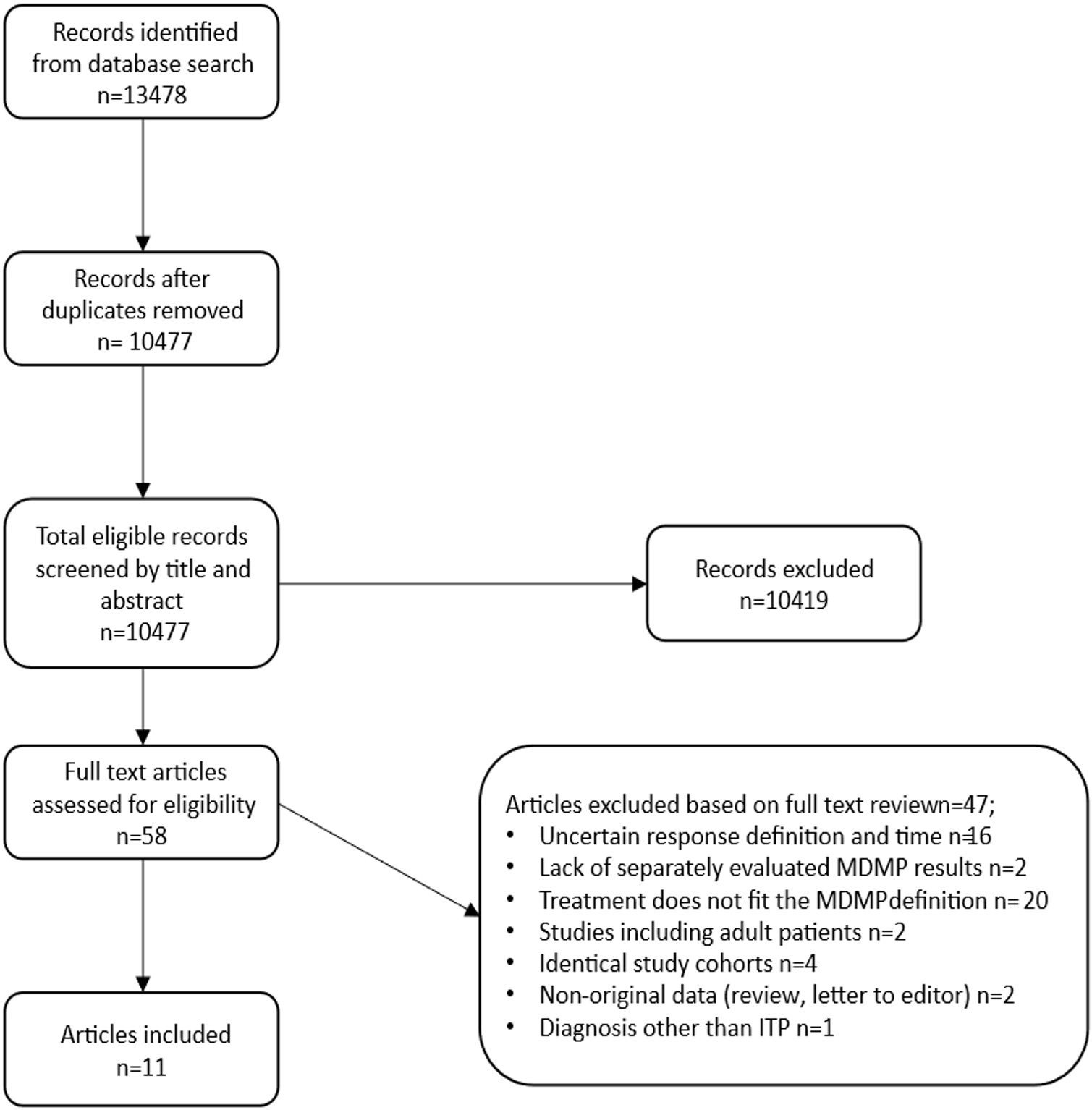
A total of 10,477 records were identified through database searches after duplicates were removed; 10,419 were excluded based on title and/or abstract, leaving 58 records for screening. After abstract and full-text screening, we identified 11 records relevant to this study’s objective, which were then subjected to standardized data extraction and analysis (Fig. 1).
All the studies were from Türkiye and were published between 1993 and 2018. Seven of the 11 records12-18 (63.6%) compared MDMP to IVIG; five were randomized, prospective studies12,13,16-18 conducted with acute ITP patients, and two were retrospective observational studies, one of which included acute and the other included both acute and chronic ITP patients. Four of the 11 records (36.4%) discussed the effect of MDMP, all of which were prospective cohort studies.19-22 Two studies19,20 assessed the impact of MDMP on acute ITP patients as a secondary endpoint, whereas one21 examined its effects in refractory ITP patients, and the last study22 evaluated divided doses of MDMP in acute ITP patients.
A total of 717 patients, of whom 362 received MDMP, 219 received IVIG, and 136 received other various therapies or remained without therapy, were enrolled. The patients’ ages ranged from 0 to 17 years, and the male-to-female ratio was 0.92. The highest initial platelet count was below 50x109/L and was accompanied by bleeding.
A meta-analysis of platelet increments in six studies comparing MDMP to IVIG was performed (Table I).
| F, female; ITP, immune thrombocytopenia; IVIG, intravenous immunoglobulin; M, male; MDMP, mega dose methylprednisolone; RP, randomized prospective, RO, retrospective observational; PC, Prospective cohort. | ||||||||||||||
| Table I. Characteristics and outcomes of studies included in the systematic review and meta-analysis. | ||||||||||||||
|
References, Year |
Study Design | ITP classif. |
MDMP (n) |
IVIG (n) |
Other treatment/s or control (n) |
Gender (M/F) | Age | Platelet count (×109/L) |
MDMP response (%) Definition |
IVIG response (%) Definition |
Chronicity MDMP (%) Definition |
Chronicity IVIG (%) Definition |
MDMP side effects (n) |
IVIG side effects (n) |
| Studies included in the meta-analysis | ||||||||||||||
| Duru et al.12 2002 | RP | Acute | 12 | 12 | 26 | 26/24 |
0-15 (range) |
2-16 (range) |
9 (75%) >50x109/L | 10 (83%) >50x109/L |
3 (25%) Over 12 months |
2 (17%) Over 12 months |
Weight gain, 12 Gastric discomfort, 7 Hyperglycemia, 1 Hypertension, 1 |
Headache, 4 Vomiting, 2 Fever, 1 Chills, 1 |
| 7 (58%) >150x109/L | 8 (67%) >150x109/L | |||||||||||||
| Erduran et al.13 2003 | RP | Acute | 20 | 22 | - | 18/24 |
1-13 (range) |
1-20 (range) |
19 (95%) >50x109/L | 21 (95%) >50x109/L |
5 (25%) Over 6 months |
4 (18%) Over 6 months |
Gastric discomfort, 2 Hyperglycemia, 2 Behavior change, 3 |
Fever, 5 Headache, 5 Vomiting, 5 Chills, 1 |
| 18 (90%) >100x109/L | 19 (86%) >100x109/L | |||||||||||||
| Güngör et al.14 2019 | RO | Acute and Chronic | 66 | 116 | 29 | 104/107 | 5.4±4.1 (mean) | <20 | 61 (92%) >20x109/L | 112 (97%) >20x109/L | Unspecified | Unspecified | Unspecified | Unspecified |
| 44 (67%) >100x109/L | 70 (60%) >100x109/L | |||||||||||||
| Koçak et al.15 2007 | RO | Acute | 82 | 29 | 32 | 74/69 | 6.4±3.8 (mean) | <20 or <50 with bleeding | 80 (97%) >20x109/L | 26 (89%) >20x109/L |
14 (17%) Over 6 months |
5 (17%) Over 6 months |
Weight gain, 82 Hypertension, 3 Hyperglycemia, 2 |
Allergic reaction,2 Aseptic meningitis, 1 |
| 59 (72%) >150x109/L | 15 (52%) >150x109/L | |||||||||||||
| Özsoylu et al.16 1993 | RP | Acute | 10 | 10 | - | 11/9 | 0-11 (range) | <50 | 8 (80%) >150x109/L | 9 (90%) >150x109/L | Unspecified | Unspecified | No side effects |
Fever, 3 Chills, 3 |
| Balkan et al.17 2009 | RP | Acute | 10 | 11 | - | 8/13 | 2-16 (range) | <30 | 10 (100%) >150x109/L | 11 (100%) >150x109/L | Unspecified | Unspecified | Unspecified | Unspecified |
| Other studies | ||||||||||||||
| Albayrak et al.18 1994 | RP | Acute | 19 | 19 | 19 | 31/26 | 0-17 (range) | <25 | 18 (95%) >50x109/L | 15 (79%) >100x109/L |
None Over 12 months |
1 (5%) Over 12 months |
Hypertension, 1 Gastric discomfort, 2 |
Aseptic meningitis 1 Headache, 2 Vomiting, 2 |
| 14 (74%) >100x109/L | ||||||||||||||
| Akin et al.19 2011 | PC | Acute | 31 | - | - | 14 /17 | 2-16 (range) | <20 | 31 (100%) >50x109/L | - |
14 (45%) Over 12 months |
- | Unspecified | - |
| 30 (97%) >100x109/L | ||||||||||||||
| Cura et al.20 2016 | PC | Acute | 30 | - | 30 | 22/38 |
1-10 (range) |
5-14 (range) |
30 (100%) >50x109/L | - | Unspecified | - | Unspecified | - |
| Özer et al.21 2000 | PC | Chronic | 22 | - | - | 8/14 | 2-13 | <20 | 22 (100%) >150x109/L | - |
22 (100%) Over 6 months |
- |
Weight gain, 8 Behavior change, 2 |
- |
| Turhan et al.22 2018 | PC | Acute | 60 | - | - | 28/32 | 3-11.3 (range) | <20 | 60 (100%) >100x109/L | - | Unspecified | - | Hyperglycemia, 7 | - |
Severity of bleeding and treatment decision
At initial presentation, bleeding presence or severity was not reported in six of the 11 studies.13,16-20 Only mild bleeding was reported in four of the 11 studies.12,14,21,22 Koçak et al.15 reported major bleeding in 9.8% of the study population in addition to minor bleeding. They also reported that one patient (1/143) experienced ICH during follow-up. Albayrak et al.18 also reported that one patient (1/57), who was refractory to treatment, developed ICH. None of the studies considered therapy and treatment choice based on bleeding severity.
Response to MDMP
The overall response to MDMP was evaluated in 11 studies and 362 patients. The response was observed in 348 patients (96.1%) without distinction between PR and CR. In 10 of the 11 studies12-19,21,22, CR rates could be extracted and totaled 81.9% (272/332). In studies limiting MDMP to 1 g12,17,19,21, the overall response rate was 96% (72/75). In the other studies without a maximum MDMP dose13-16,18,20,22, the response rate was 96.2% (276/287).
Side effects of MDMP
Side effects of MDMP were reported in seven studies, five of which compared MDMP to IVIG (Table I). Thus, 135 side effects were observed in 225 patients, for a rate of 0.6 per patient. The side effects were weight gain in 102 patients (45.3%), hyperglycemia in 12 (5.3%), gastric discomfort in 11 (4.9%), hypertension in 5 (2.2%), and behavioral changes in 5 (2.2%). All of the side effects were reported as transient.
Chronicity after MDMP
Defining chronicity as a duration exceeding 12 months, three studies12,18,19 reported chronicity rates, yielding a pooled incidence of 30.9% (17 patients out of 55). The highest rate (45%) was observed in the study by Akin et al.19, which restricted the daily MDMP dose to 1 g.
Comparison of MDMP with IVIG
In the seven studies12-18 comparing MDMP with IVIG, the overall response rates were 93.6% (205/219) for MDMP and 93.2% (204/219) for IVIG. The complete response rates were 73.1% (160/219) for MDMP and 67.1% (147/219) for IVIG. The side effects were reported in five studies12,13,15,16,18, 118 side effects in 143 patients with MDMP, 0.83 per patient. Thirty-eight side effects in 92 patients with IVIG, for a rate of 0.41 per patient. MDMP side effects were weight gain in 94 patients (65.7%), gastric discomfort in 11 (7.7%), hyperglycemia in 5 (3.5%), hypertension in 5 (3.5%), and behavioral changes in 3 (2.1%). The side effects related to IVIG were headaches in 11 patients (12%), fever in 9 (9.8%), vomiting in 9 (9.8%), chills in 5 (5.4%), aseptic meningitis in 2 (2.2%) requiring hospitalization, and allergic reactions in 2 (2.2%).
Meta-analysis of platelet increment with MDMP and IVIG
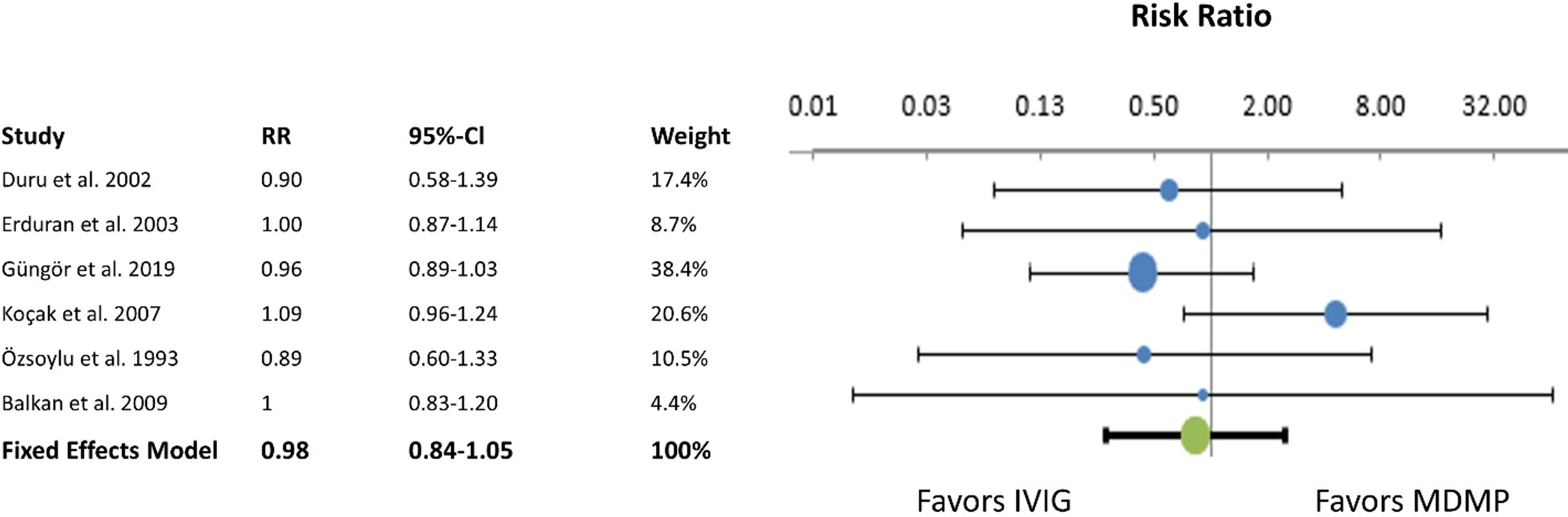
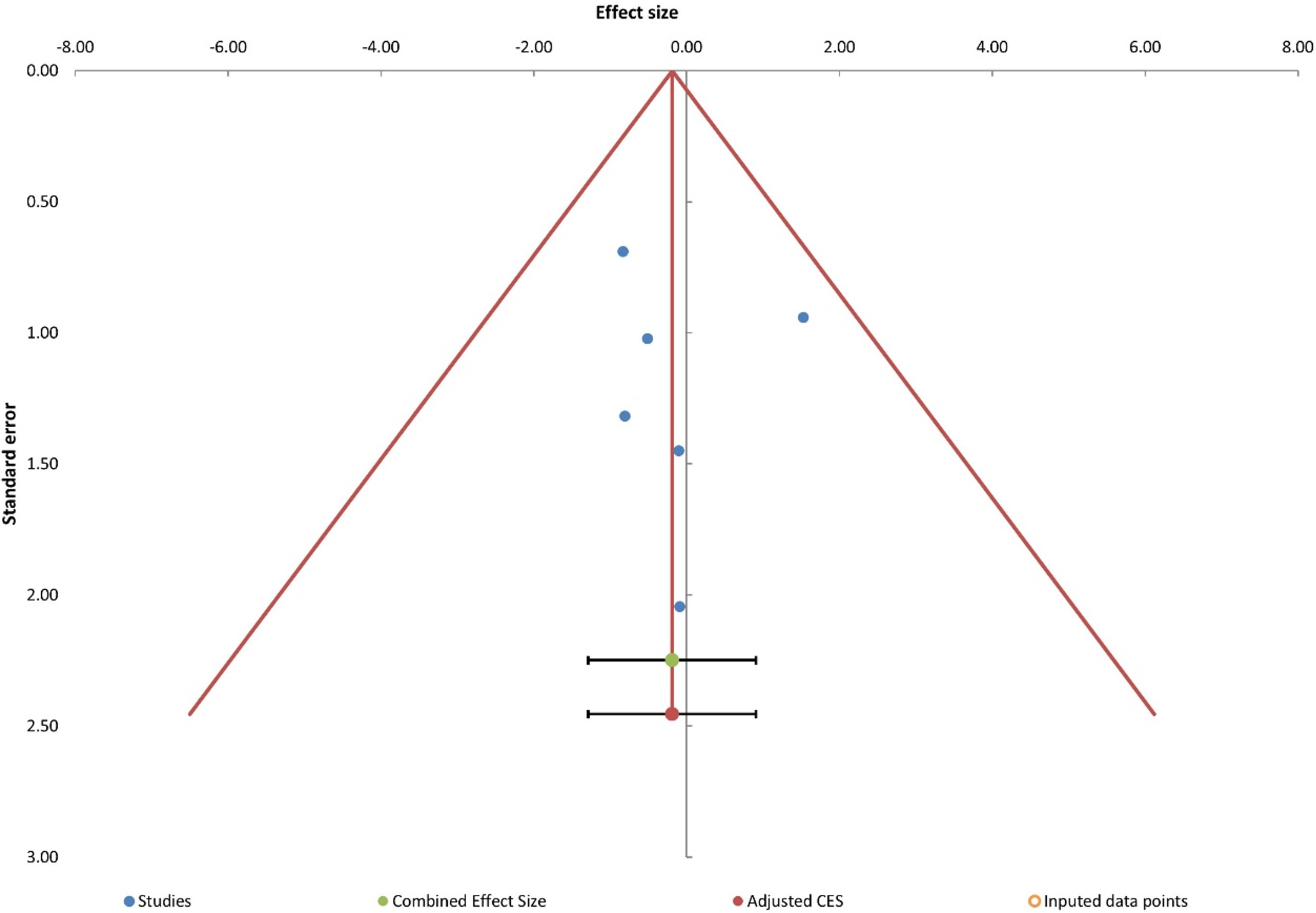
A meta-analysis of platelet increment rates in six randomized studies12-17 comparing MDMP to IVIG was performed, and the RR was calculated from the platelet count increment rates (Fig. 2). In one of the six studies, MDMP treatment was more successful than IVIG; in two studies, the success rate was the same (RR = 1); and in three studies, IVIG was more successful than MDMP. Given the observed homogeneity across studies (I2=0.0%; p=0.475), a fixed-effects model was employed to combine the study results statistically. As a result, the pooled RR was 0.98 (95% CI: 0.84–1.05). Therefore, based on the rates of increase in platelet count, there was no statistically significant difference between MDMP and IVIG (RR = 0.98; Z = -0.45; p = 0.65). Furthermore, visual inspection of the funnel plot demonstrated a symmetrical distribution of effect sizes, suggesting no significant publication bias (Fig. 3). This was statistically confirmed using Kendall’s rank correlation test, which yielded a Kendall’s τ of 0.20 (p = 0.573).
Discussion
Our systematic review and meta-analysis demonstrate that MDMP, when used as a monotherapy, is as effective as IVIG in achieving rapid platelet count increment in pediatric ITP. This finding is important given the current emphasis by hematology societies on restricting and optimizing IVIG use for ITP due to supply and cost concerns.23 The MDMP therapy evaluated in this study differed from IV MP suggested in the current guidelines for severe hemorrhage in that the former was not a part of combination therapy, and the treatment lasted for seven instead of three days.1,3,5
The overall reported side-effect rates were acceptable in both the MDMP and IVIG groups in our study (0.83 vs 0.41 per patient); however, the profiles were different. MDMP therapy may lead to endocrinologic, metabolic, and ophthalmologic complications, especially with long-term use. Steroids administered early in the morning for less than two weeks did not suppress the adrenal hypothalamic- pituitary axis.24 Therefore, MDMP should be given at 6:00 a.m. to minimize side effects. However, a significant complication is that MDMP can cause osteonecrosis in acute ITP, particularly at high cumulative doses.25 Children with chronic ITP have been shown to have higher rates of osteoporosis, especially those who received more than 10 cycles of MDMP.26 No osteoporosis was observed in our cohort, possibly because long-term outcomes were not tracked. Although there is no systematic review on thrombosis in childhood ITP, adult ITP patients are prone to a prothrombotic state, regardless of treatment type and presence of antiphospholipid antibodies, especially in chronic ITP.27-29 Moreover, in childhood ITP, pre-treatment protein C and protein S levels were significantly lower than in controls and improved considerably after MDMP treatment.30 This suggests a preexisting hypercoagulable condition in ITP, which was resolved by MDMP, though larger studies are needed. In our systematic review, no cases of thrombosis were reported. On the other hand, IVIG side effects occur in 5-15% of infusions.31 In our review, headache was the most common adverse effect, consistent with the literature. Severe reactions included only aseptic meningitis, which required hospitalization. Other common reactions, like fatigue, abdominal pain, myalgia, and severe issues such as anaphylaxis in some IgA-deficient patients, thrombosis, kidney impairment, severe hemolysis, and neutropenia, were not reported in our cohort.3,31
Steroids are more cost-effective than IVIG.32 Furthermore, suggestions to restrict IVIG use and to favor corticosteroids as the first-line therapy have been made in various treatment guidelines worldwide. Recently, the American and Canadian Hematology Societies have recommended corticosteroids for children newly diagnosed with ITP first, and reserve IVIG for severe bleeding.23 ITP accounts for 4.6-17% of all diseases treated with IVIG.33,34 The supply of IVIG may be insufficient to meet demand, as both the number of IVIG units used across all indications and costs have reportedly increased by nearly 5% recently.34 Although there are no statistics on the frequency and cost of IVIG use in our country, it is observed that IVIG, which is administered in just one day, is often the first treatment choice, regardless of bleeding severity. Although the duration of therapy with MDMP is longer compared to IVIG, it can be given orally, even at home.16 It is important to remember that MDMP offers advantages such as oral administration, low cost, easy availability, rapid action as a non-biological agent, and as a reliable alternative to IVIG. Since MDMP was as effective as IVIG in rapidly increasing platelet counts, it can be used in ITP cases requiring a quick platelet increase.3,5,35
In our review, two patients developed ICH during follow-up. Currently, patients with ICH or those at risk of developing ICH, or who have major bleeding according to bleeding scores, are recommended to receive combination therapies. In our review, MDMP was used as monotherapy, but the role of MDMP as part of combination therapy and whether seven days of MDMP is more effective for patients with autoimmune or rheumatologic disorders, which were initially masked as ITP, should be investigated in future studies. Additionally, in our cohort, treatment decisions did not depend on the severity of bleeding; therefore, monotherapy with MDMP may be necessary for moderate to severe bleeding (grades 3a-5).
Limitations
Despite following the PRISMA guidelines and conducting a rigorous meta-analysis, our study has several limitations. First, while the meta-analysis demonstrated a high level of statistical homogeneity, the included studies exhibit methodological diversity in patient populations, study designs, and thresholds for assessing platelet count increments. Although we addressed this by using the lowest threshold reported in each study, this variability should be considered when interpreting our findings. Furthermore, all included studies were conducted in Türkiye, which may limit the generalizability of our results to other populations. Second, many studies lacked data on baseline bleeding severity or standardized assessment scores, restricting a comprehensive evaluation of safety and efficacy in high-risk patients. Third, long-term outcomes, such as osteoporosis rates, were based on a limited number of studies with short follow-up periods, preventing firm conclusions on long-term safety. Finally, while our assessment of publication bias did not indicate significant bias, the small number of included studies remains a constraint.
Conclusions
Our study concludes that MDMP treatment is a reliable, cost-effective, and practical choice for pediatric ITP, demonstrating efficacy equivalent to IVIG in achieving rapid platelet count increment. MDMP provides a strong, non-biological first-line alternative, especially advantageous in situations that demand high cost-efficiency and ease of administration. Further high-quality studies are essential to fully clarify MDMP’s role, particularly in patients stratified according to high-grade bleeding scores, and to confirm its long-term safety profile.
Acknowledgements
We dedicate this work to the memory of the late Prof. Dr. Şinasi Özsoylu, the pioneer in megadose methylprednisolone therapy whose legacy inspired this study. We also extend our thanks to Prof. Dr. Namık Yaşar Özbek for his valuable guidance.
Ethical approval
Ethics committee approval was not required.
Source of funding
The authors declare the study received no funding.
Conflict of interest
The authors declare that there is no conflict of interest.
References
- Bussel JB. Immune thrombocytopenia (ITP) in children: clinical features and diagnosis. In: O’Brien S, Armsby C, editors. Waltham, MA: UpToDate Inc. Available at: https://www.uptodate.com (Accessed on 28 April 2025).
- Yildiz I, Ozdemir N, Celkan T, et al. Initial management of childhood acute immune thrombocytopenia: single-center experience of 32 years. Pediatr Hematol Oncol 2015; 32: 406-414. https://doi.org/10.3109/08880018.2015.1040931
- Bussel JB. Immune Thrombocytopenia (ITP) in children: management of newly diagnosed patients. In: O’Brien S, Armsby C, eds. Immune Thrombocytopenia (ITP) in children. Available at: https://www.uptodate.com (Accessed on 28 April 2025).
- Provan D, Stasi R, Newland AC, et al. International consensus report on the investigation and management of primary immune thrombocytopenia. Blood 2010; 115: 168-186. https://doi.org/10.1182/blood-2009-06-225565
- Provan D, Arnold DM, Bussel JB, et al. Updated international consensus report on the investigation and management of primary immune thrombocytopenia. Blood Adv 2019; 3: 3780-3817. https://doi.org/10.1182/bloodadvances.2019000812
- Rodeghiero F, Stasi R, Gernsheimer T, et al. Standardization of terminology, definitions and outcome criteria in immune thrombocytopenic purpura of adults and children: report from an international working group. Blood 2009; 113: 2386-2393. https://doi.org/10.1182/blood-2008-07-162503
- Schoettler ML, Graham D, Tao W, et al. Increasing observation rates in low-risk pediatric immune thrombocytopenia using a standardized clinical assessment and management plan (SCAMP®). Pediatr Blood Cancer 2017; 64: 10.1002/pbc.26303. https://doi.org/10.1002/pbc.26303
- Ozsoylu S, Irken G, Karabent A. High-dose intravenous methylprednisolone for acute childhood idiopathic thrombocytopenic purpura. Eur J Haematol 1989; 42: 431-435. https://doi.org/10.1111/j.1600-0609.1989.tb01466.x
- Ozsoylu S, Ertürk G. Mega-dose intravenous methylprednisone for the treatment of onyalai: a case report. Eur J Pediatr 1991; 150: 228-229. https://doi.org/10.1007/BF01955517
- Ozsoylu S. Bolus methylprednisolone therapy in chronic idiopathic thrombocytopenic purpura in children. Acta Haematol 1984; 72: 359. https://doi.org/10.1159/000206418
- Moher D, Liberati A, Tetzlaff J, Altman DG, PRISMA Group. Preferred reporting items for systematic reviews and meta-analyses: the PRISMA statement. PLoS Med 2009; 6: e1000097. https://doi.org/10.1371/journal.pmed.1000097
- Duru F, Fisgin T, Yarali N, Kara A. Clinical course of children with immune thrombocytopenic purpura treated with intravenous immunoglobulin G or megadose methylprednisolone or observed without therapy. Pediatr Hematol Oncol 2002; 19: 219-225. https://doi.org/10.1080/08880010252899370
- Erduran E, Aslan Y, Gedik Y, Orhan F. A randomized and comparative study of intravenous immunoglobulin and mega dose methylprednisolone treatments in children with acute idiopathic thrombocytopenic purpura. Turk J Pediatr 2003; 45: 295-300. https://doi.org/10.24953/turkjpediatr.2003.2909
- Güngör T, Arman Bilir Ö, Koşan Çulha V, et al. Retrospective evaluation of children with immune thrombocytopenic purpura and factors contributing to chronicity. Pediatr Neonatol 2019; 60: 411-416. https://doi.org/10.1016/j.pedneo.2018.10.002
- Koçak U, Aral YZ, Kaya Z, Oztürk G, Gürsel T. Evaluation of clinical characteristics, diagnosis and management in childhood immune thrombocytopenic purpura: a single center’s experience. Turk J Pediatr 2007; 49: 250-255. https://doi.org/10.24953/turkjpediatr.2007.2546
- Özsoylu S, Sayli TR, Oztürk G. Oral megadose methylprednisolone versus intravenous immunoglobulin for acute childhood idiopathic thrombocytopenic purpura. Pediatr Hematol Oncol 1993; 10: 317-321. https://doi.org/10.3109/08880019309029508
- Balkan C, Kavaklı K, Karapınar D. Coagulation parameters in children with acute immune thrombocytopenic purpura. Ege Journal of Medicine 2009; 48: 13-18.
- Albayrak D, Işlek I, Kalaycí AG, Gürses N. Acute immune thrombocytopenic purpura: a comparative study of very high oral doses of methylprednisolone and intravenously administered immune globulin. J Pediatr 1994; 125: 1004-1007. https://doi.org/10.1016/s0022-3476(05)82024-4
- Akin M, Turgut S, Ayada C, Polat Y, Balci YI, Erdoğan F. Relation between 3435C>T multidrug resistance 1 gene polymorphism with high dose methylprednisolone treatment of childhood acute idiopathic thrombocytopenic purpura. Gene 2011; 487: 80-83. https://doi.org/10.1016/j.gene.2011.06.019
- Cura M, Koç A, Aksoy N, Özdemir ZC. Effect of short-term, high-dose methylprednisolone on oxidative stress in children with acute immune thrombocytopenia. Blood Res 2016; 51: 261-267. https://doi.org/10.5045/br.2016.51.4.261
- Özer EA, Yaprak I, Atabay B, Türker M, Akşit S, Sarioğlu B. Oral cyclic megadose methylprednisolone therapy for chronic immune thrombocytopenic purpura in childhood. Eur J Haematol 2000; 64: 411-415. https://doi.org/10.1034/j.1600-0609.2000.90166.x
- Turhan AB, Özdemir ZC, Bör Ö. Use of single- or two-dose pulse methylprednisolone in the treatment of acute immune thrombocytopenic purpura. Sisli Etfal Hastan Tip Bul 2018; 52: 279-284. https://doi.org/10.5350/SEMB.20171130112516
- Neunert C, Terrell DR, Arnold DM, et al. American Society of Hematology 2019 guidelines for immune thrombocytopenia. Blood Adv 2019; 3: 3829-3866. https://doi.org/10.1182/bloodadvances.2019000966
- Tanrıverdi F, Bayram F. Clinical application of glucocorticoids. Türkiye Klinikleri J Int Med Sci 2005; 1: 65-70.
- Yildirim ZK, Büyükavci M, Eren S, Orbak Z, Sahin A, Karakelleoğlu C. Late side effects of high-dose steroid therapy on skeletal system in children with idiopathic thrombocytopenic purpura. J Pediatr Hematol Oncol 2008; 30: 749-753. https://doi.org/10.1097/MPH.0b013e318180bbc9
- Dilber C, Dagdemir A, Albayrak D, et al. Reduced bone mineral density in childhood chronic idiopathic thrombocytopenic purpura treated with high-dose methylprednisolone. Bone 2004; 35: 306-311. https://doi.org/10.1016/j.bone.2004.04.005
- Liang H, Duan L, Long M, et al. Analysis of risk factors and the establishment of a predictive model for thrombosis in patients with immune thrombocytopenia. Clin Appl Thromb Hemost 2025; 31: 10760296241301398. https://doi.org/10.1177/10760296241301398
- Nørgaard M. Thrombosis in patients with primary chronic immune thrombocytopenia. Thromb Res 2012; 130(Suppl 1): S74-S75. https://doi.org/10.1016/j.thromres.2012.08.282
- Zhou F, Zhang S, Li R, et al. A retrospective study of risk factors for thrombosis in patients with ITP. Hematology 2025; 30. https://doi.org/10.1080/16078454.2025.2472461
- Oner AF, Bay A, Kuru M, Uner A, Arslan S, Caksen H. Effects of high-dose methylprednisolone therapy on coagulation factors in patients with acute immune thrombocytopenic purpura. Clin Appl Thromb Hemost 2005; 11: 489-492. https://doi.org/10.1177/107602960501100418
- Guo Y, Tian X, Wang X, Xiao Z. Adverse effects of immunoglobulin therapy. Front Immunol 2018; 9: 1299. https://doi.org/10.3389/fimmu.2018.01299
- Chen M, Zhang LL, Hu M, Gao J, Tong RS. Cost-effectiveness of treatment for acute childhood idiopathic thrombocytopenic purpura (ITP)-a systematic review. J Int Med Res 2008; 36: 572-578. https://doi.org/10.1177/147323000803600324
- Perez EE, Orange JS, Bonilla F, et al. Update on the use of immunoglobulin in human disease: a review of evidence. J Allergy Clin Immunol 2017; 139: S1-S46. https://doi.org/10.1016/j.jaci.2016.09.023
- Hsia CC, Liu Y, Eckert K, Monga N, Elia-Pacitti J, Heddle NM. Intravenous Immunoglobulin (IVIg) utilization in Immune Thrombocytopenia (ITP): a multi-center, retrospective review. Drugs Real World Outcomes 2015; 2: 35-42. https://doi.org/10.1007/s40801-015-0009-6
- Boz N, Çil M, Leblebisatan G. Pediatrik immün trombositopeni. Olcay L, editor. Çocuklarda Trombosit Hastalıkları. 1st ed. Ankara: Türkiye Klinikleri; 2025: 40-49.
Copyright and license
Copyright © 2026 The Author(s). This is an open access article distributed under the Creative Commons Attribution License (CC BY), which permits unrestricted use, distribution, and reproduction in any medium or format, provided the original work is properly cited.