Abstract
This narrative review provides a comprehensive synthesis of mortality rates and associated risk factors among individuals with autism spectrum disorder (ASD) across the lifespan. Following a search across PubMed, Scopus, and Google Scholar, 31 peer-reviewed studies were identified for synthesis. The findings consistently demonstrate that individuals with ASD experience significantly higher mortality rates compared to neurotypical controls. Analysis shows a distinct developmental shift: in childhood and adolescence, external causes are predominant, with accidents—particularly drowning—accounting for a substantial portion of fatalities, estimated between 70% and 90% in some reports. In contrast, adult mortality is increasingly driven by natural causes. The evidence indicates a reduced life expectancy, with some studies reporting average ages of death as low as 36 years, depending on comorbid conditions. Furthermore, standardized mortality ratios appear notably higher in individuals with co-occurring intellectual disabilities and epilepsy, with some cohorts showing risks several times higher than the general population. A substantial proportion of ASD-related mortality is potentially preventable through targeted safety training, early metabolic screening, and ASD-friendly healthcare practices. Addressing communication barriers and sensory sensitivities in clinical settings is essential for early diagnosis and effective management of chronic conditions to reduce the mortality gap.
Keywords: autism spectrum disorder, life expectancy, mortality, premature death
Introduction
Autism spectrum disorder (ASD) is a neurodevelopmental disorder characterized by problems with social communication and interaction, and restricted/repetitive behaviors or interests.1 The prevalence of ASD is increasing. 3.2% of 8-year-old children are diagnosed with ASD, and it is three times more common in boys than girls.2 Difficulties related to ASD are often observed throughout life, and a study in the USA indicated that 2.21% of adults have a diagnosis.3 ASD is frequently accompanied by various psychiatric disorders such as attention deficit hyperactivity disorder (ADHD), anxiety disorders, and depression. Neurological disorders, including epilepsy, gastrointestinal problems, and metabolic disorders, can also frequently coexist.4 The course of ASD symptoms varies from person to person. There are prognostic factors that indicate how this course will unfold.5,6
Unlike chronic diseases such as cystic fibrosis and muscular diseases, where mortality rates are better defined, studies on mortality rates in individuals diagnosed with ASD are quite limited.7-9 The literature indicates that individuals diagnosed with ASD have a higher risk of mortality compared to neurotypical individuals in various studies.10-12 However, despite ASD being a significant disease affecting a person’s functionality and frequently co-occurring with other chronic diseases, the specific factors influencing the causes of early mortality in these individuals are still not fully understood. While intellectual disability and epilepsy have been identified as key contributing factors to increased mortality rates, the level of knowledge regarding common causes of death and effective prevention strategies in individuals diagnosed with ASD is still insufficient.13,14
The increased mortality rate in individuals diagnosed with ASD may be due to various factors, including comorbid physical illnesses, communication problems related to impaired social interaction that hinder access to healthcare, or chronic stress in parents. Unnatural causes of death, such as drowning, accidents, and suicide, are also more common in individuals diagnosed with ASD than in the general population.15-17 Some studies indicate that the rates of unnatural deaths in these individuals are comparable to those of natural causes of death.18 Since accidents and suicide are among the preventable causes of death, identifying age-specific risk factors in individuals diagnosed with ASD is crucial for developing primary prevention and autism-friendly health care policies.19,20
Studies in the literature generally present the mortality characteristics of children and adults diagnosed with ASD together, which makes it difficult to determine age-specific mortality characteristics in ASD. Drawing attention to this gap in the literature, this review aims to identify the most common causes of death in individuals of all ages diagnosed with ASD, to define the factors that increase and decrease the risk of death, and to determine how these factors differ according to the level of functionality. The literature compiled until July 1, 2025, has been divided into three groups: (1) studies focusing solely on children and adolescents, (2) studies including both child and adult populations, and (3) studies focusing exclusively on adults. This will make it possible to identify what clinicians and health policymakers can focus on in order to reduce mortality rates in individuals diagnosed with ASD.
Methods
This narrative review was conducted to synthesize current evidence regarding mortality characteristics in individuals with ASD. A comprehensive electronic search was performed across PubMed, Google Scholar, and Scopus databases between May 1, 2025, and July 1, 2025, to identify relevant peer-reviewed studies published from the inception of the databases up to the search date. The search strategy employed a combination of keywords including ‘autism spectrum disorder’, ‘mortality’, ‘premature death’, and ‘life expectancy’.
To ensure a high standard of reporting, this review followed the SANRA (Scale for the Quality Assessment of Narrative Review Articles) guidelines.21 The eligibility of studies was determined based on predefined criteria. To provide a holistic perspective, the inclusion criteria encompassed original research articles, clinical case reports, and key systematic reviews providing data on mortality in ASD. The selection was limited to studies published in the English language to ensure consistency in data interpretation. Studies such as editorials, book chapters, or conference abstracts were excluded.
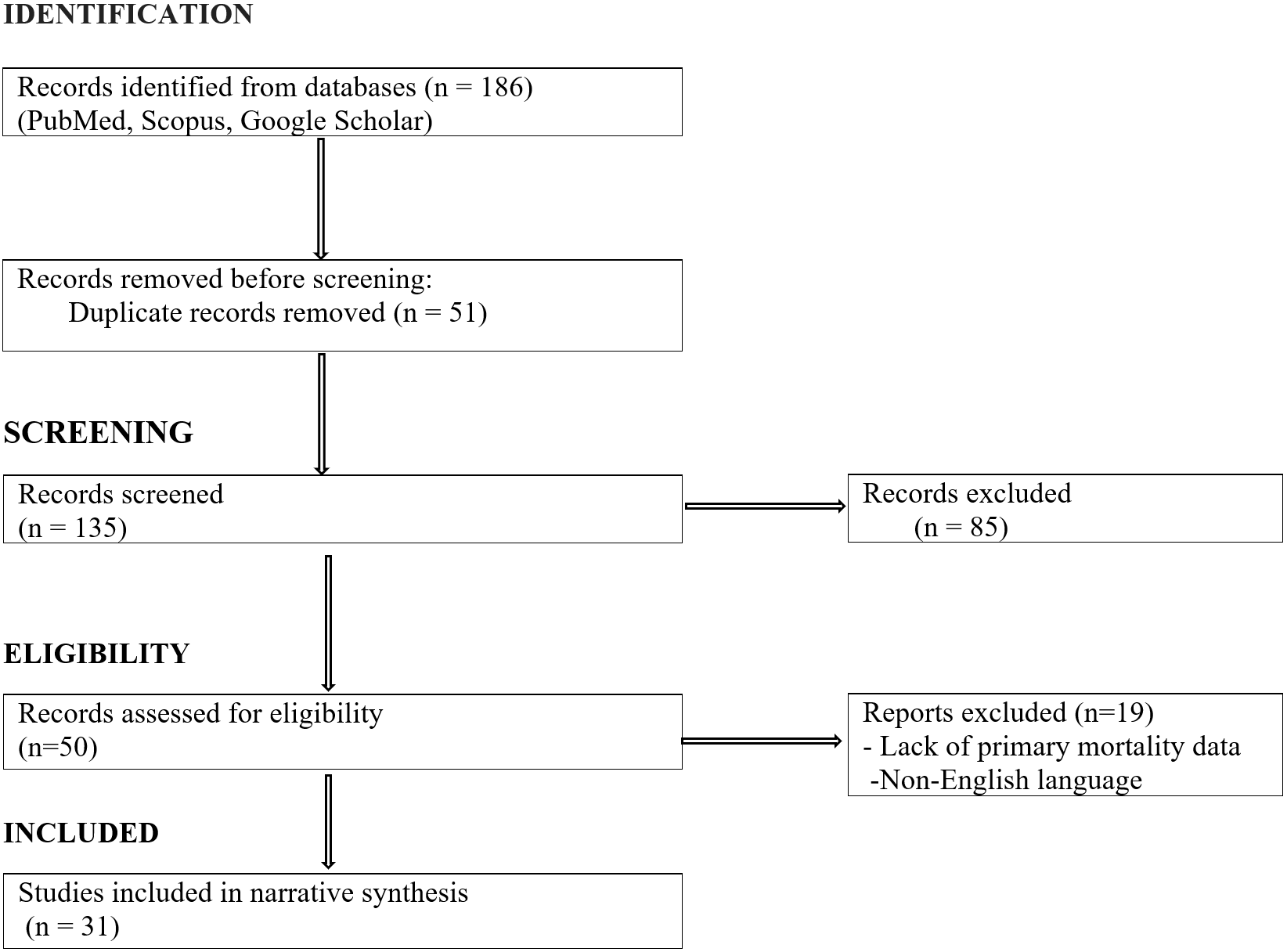
The initial search yielded 186 records; after removing duplicates and screening, 50 articles were assessed in full. Ultimately, 31 studies meeting the criteria—including original research, illustrative case reports, and comprehensive reviews—were identified. For clinical interpretation, these were categorized into: childhood and adolescence (0–18 years), adulthood (>18 years), and lifespan perspectives (Fig. 1).
Results
The systematic synthesis of the literature yielded 31 studies that met the inclusion criteria, providing a comprehensive overview of mortality in individuals with ASD. These studies, which include original research, clinical case reports, and systematic reviews, highlight a consistent pattern of increased mortality risk across the lifespan compared to the general population. The identified factors contributing to this risk are multifactorial, ranging from co-occurring medical conditions to external environmental hazards. A detailed summary of the characteristics, populations, and key findings of each included study is presented in Table I.
| ASD: autism spectrum disorder; ID: intellectual disability; SMR: standardized mortality ratio; USA: United States of America. | ||
| Table I. Summary of included studies on mortality in individuals with ASD. | ||
| Author (year) | Population / country | Key findings & mortality causes |
| Childhood studies | ||
| Kim et al.23 (2021) | National cohort (South Korea) | ASD children had a significantly higher mortality risk than the general population; deaths often resulted from treatable or preventable medical conditions. |
| Woolfenden et al.24 (2012) | Systematic review | Identified significant disparities in mortality rates; emphasized that most deaths in developmental disabilities are preventable with better healthcare access. |
| Yoo et al.25 (2022) | Birth cohort (South Korea) | Early identification of hearing/physical problems correlates with future mortality risk. |
| Zylbersztejn et al.26 (2018) | National cohort (UK) | ASD is associated with increased risk of death from treatable causes and accidents. |
| Guan and Li28 (2017) | 1,367 deaths (USA) | 73.9% of drowning deaths occurred following elopement; average age 7.7 years |
| Smith et al.29 (2021) |
787,666 pupils (Scotland) |
|
| Taylor et al.30 (2022) | Case report (USA) | Sudden death due to ruptured AVM; highlights difficulties in verbalizing pain symptoms. |
| Adulthood studies | ||
| Krantz et al.11 (2023) | Medicare adults (USA) | Mortality gap narrows after age 65; cardiovascular and neurological diseases predominate. |
| Santomauro et al.16 (2024) | Global meta-analysis | Suicide is a leading cause of death in high-functioning adults; higher risk in females. |
| DaWalt et al.35 (2019) | Longitudinal cohort (USA) |
|
| Akobirshoev et al.40 (2020) | Retrospective (USA) | In-hospital mortality is higher in ASD due to physical comorbidities |
| Lunsky et al.41 (2022) | Population cohort (Canada) |
|
| Spanyol et al.43 (2025) | COVID-19 cohort (Brazil) | ASD is an independent risk factor for in-hospital mortality; higher need for ventilation. |
| Lifespan studies | ||
| Catalá-López et al.10 (2016) | Systematic review & meta-analysis | ASD is associated with a significantly higher risk of all-cause mortality; accidents and nervous system diseases are major factors. |
| Schendel et al.12 (2016) | 1.9M cohort (Denmark) | Twofold increased mortality risk; higher in females and those with comorbid epilepsy/ID. |
| Bilder et al.13 (2013) |
305 individuals (USA) | Significantly higher risk for natural causes (epilepsy, respiratory) and unintentional injuries. |
| Forsyth et al.14 (2023) | Systematic review | Confirmed significantly higher mortality risk in ASD; identified external causes (e.g., drowning, suicide) and preventable medical conditions as primary drivers. |
| Guan and Li15 (2017) | Retrospective cohort (USA) |
|
| Shavelle et al.17 (2001) | 13,111 cohort (USA) | Seizures and respiratory infections are primary causes; SMR significantly higher for females. |
| Kim et al.18 (2025) | Retrospective cross-sectional (South Korea) |
Age-standardized mortality rate was 5 times higher than the general population. Deaths were split nearly 1:1 between diseases (50.7%) and injury (49.3%). Average age at death was approximately 50 years lower than the general population. |
| Jokiranta-Olkoniemi et al.22 (2021) | Nationwide cohort (Finland) |
|
| Rybczynski27 (2024) | Review | High risk of mortality linked to wandering (elopement) and suicidal ideation. |
| Hirvikoski et al.31 (2016) | 27,122 cohort (Sweden) | Life expectancy reduced by 18 years. High suicide risk in those without ID. |
| Huang et al.32 (2024) | National cohort (Taiwan) |
|
| Hwang et al.33 (2019) | National sample (USA) |
|
| Mouridsen et al.34 (2008) | 30-year follow-up | Higher mortality in those with profound intellectual disabilities. |
| Shavelle and Strauss36 (1998) | Comparative study (USA) | Overall mortality ratio was 213%. Notably, the risk for females (490%) was significantly higher than for males (167%). Mortality ratio decreased as age increased. |
| Kirby et al.37 (2019) | 20-year follow-up (USA) | High mortality from diseases of the nervous system and accidental poisonings. |
| Davis et al.38 (2024) | Retrospective cohort (USA) |
|
| Chen et al.39 (2024) |
Population cohort (Taiwan) |
|
| Bishop et al.42 (2017) | Individuals with ASD (extracted from electronic health records) (USA) | Demonstrated that co-occurring epilepsy and lower intellectual ability are significant predictors of premature mortality in ASD. |
Mortality characteristics in children and adolescents with ASD
Ten studies, published between 2012 and 2024, specifically examined pediatric populations. The all-cause mortality risk in children with ASD is at least twofold compared to healthy peers, with a notable increase in the presence of comorbid intellectual disability (ID) and epilepsy.12,22-26 While natural and external causes both contribute to higher mortality, suicide-related deaths are less prominent in this age group than in adults. Gender-based data indicate higher mortality rates in females.12,22-26 Geographic and socioeconomic factors also influence outcomes; for instance, a South Korean cohort study (2002–2012) found higher mortality risks across all income levels, with children in the capital city showing lower risk compared to other metropolitan areas.25
External and unintentional causes of death—primarily accidents, drowning, and wandering—are more extensively reported in children than in other age groups.27 One study identified the average age of accidental drowning victims as 7.7 years, with 73.9% of these fatalities occurring after wandering behaviors near the home.28 In a Danish cohort, 22.8% of adolescent deaths were self-inflicted and 26.3% were accidental.13 Regarding natural causes, epilepsy, and other neurological diseases, circulatory diseases, respiratory illnesses, and cancer are the most frequent.22,24,29,30 Additionally, hearing-related problems identified in infancy are associated with higher mortality.23
Mortality characteristics in lifespan studies (children and adults)
Studies encompassing both children and adults confirm that individuals with ASD die several decades earlier than controls, with peak mortality occurring in the 20–30 and 40–60 age ranges.10,13,14,17,18,31-35 ID and low functional levels in childhood are significant predictors of future mortality.13,31-36 Mortality ratios for natural causes remain dominated by epilepsy, followed by cardiovascular diseases and cancer.13,14,17,18,31,33
Unnatural causes in this group include suffocation, asphyxiation, and drowning. A U.S. study (1999–2014) reported that the average age at death for individuals with ASD was 36.2 years, compared to 72.0 years in the general population, with 27.9% of deaths being injury-related.15 Suicide rates are significantly higher in individuals without ID, particularly under the age of thirty, with females showing higher suicide mortality than neurotypical peers.14,16,27,31,33,37 Furthermore, during the COVID-19 pandemic, individuals with ASD experienced significantly higher infection-related mortality.38 Regarding pharmacological interventions, antidepressant use in adults (≥18 years) was associated with decreased mortality, a relationship not demonstrated in those under 18.39
Mortality characteristics in adults with ASD
Research focusing exclusively on adults (≥18 years) indicates that mortality occurs approximately twenty years earlier than in age-matched controls, although this gap appears to diminish in individuals aged 65 and above.11,40-42 In contrast to pediatric data, some adult studies report higher mortality rates in males.11,41 Cardiovascular, urinary, and digestive system diseases are prevalent in this population, while cancer incidence is reportedly lower in some adult ASD cohorts compared to controls.42
In terms of gender-specific outcomes in adulthood, distinct mortality patterns were observed between the sexes. Natural causes, including cancer, cardiovascular, and neurological diseases, were found to be more predominant in females, whereas unnatural causes, such as accidents and injuries, occurred more frequently in males.40,41 Furthermore, the clinical severity of respiratory complications was highlighted during the COVID-19 pandemic; adult patients with ASD required significantly higher rates of both invasive and non-invasive mechanical ventilation during hospitalizations compared to those without ASD.43
Discussion
The findings of this narrative review indicate that mortality in individuals with ASD is driven by a complex architecture of behavioral, clinical, and systemic factors that extend far beyond simple biological vulnerability. To move beyond a mere statistical summary, this discussion is structured around four critical thematic pillars that emerged as the most significant drivers of premature death in the literature.
First, we examine the prominence of external mortality, a choice necessitated by the alarming rate of preventable accidents like drowning, which directly intersect with autistic sensory and wandering behaviors. Second, we address communication as a diagnostic barrier, highlighting how verbalization challenges lead to “diagnostic overshadowing” and fatal delays in treating physical illnesses. Third, we explore metabolic and systemic risks, focusing on the long-term impact of pharmacological interventions and healthcare access disparities that increasingly dominate adult mortality profiles.
The prominence of preventable external mortality
A prominent observation in the reviewed studies is the disproportionate impact of accidental deaths, particularly drowning and wandering, in children and adolescents. The high incidence of mortality following “elopement” behaviors—frequently described as being triggered by sensory seeking or a desire to escape overstimulating environments—points toward a critical safety gap highlighted in several cohorts.27,29,44 The literature suggests that these incidents are closely linked to the core symptoms of ASD rather than being purely random accidents. Consequently, it has been suggested that swimming education and water safety training could be integrated into standard intervention plans for children with ASD.15 Furthermore, incorporating traffic rules and risk-awareness training into specialized educational curricula may address the significant mortality associated with motor vehicle accidents.44
Clinical and diagnostic challenges: the role of communication
A recurring theme in the literature regarding increased mortality is the potential for delayed or inaccurate diagnosis of physical illnesses. Clinical reports indicate that the challenges individuals with ASD face in effectively verbalizing internal symptoms, such as pain, may lead to the progression of treatable conditions to fatal outcomes.30 This communication barrier is also noted as a possible factor in why hearing-related problems in infancy correlate with higher mortality risks, potentially acting as an early indicator of broader communicative challenges.23 It is hypothesized in the literature that “diagnostic overshadowing”—where physical symptoms are incorrectly attributed to ASD-related behaviors—contributes significantly to late-stage diagnoses of cancer and circulatory diseases.
Metabolic risks and healthcare barriers
The observation that adult mortality is increasingly driven by natural causes, such as cardiovascular and respiratory diseases, necessitates a focus on the long-term impact of pharmacological and systemic factors.13,18,31 There is a strong emphasis in the literature that the chronic use of psychotropic medications, particularly antipsychotics, may induce significant metabolic side effects, thereby elevating cardiovascular risk over time.41 These biological risks are further exacerbated by systemic barriers, including sensory sensitivities and “hospital phobia,” which often converge with diagnostic overshadowing to create a “compounded neglect” in clinical settings.42 This synergy of factors leads to reduced healthcare utilization, poor medication compliance, and the misinterpretation of acute physical distress as behavioral outbursts.30,41 The impact of these disparities was particularly evident during the COVID-19 pandemic; the significantly higher requirement for both invasive and non-invasive mechanical ventilation among adults with ASD suggests that these individuals often present with advanced stages of illness due to delays in seeking or receiving initial care.43
Gender-specific mortality pathways
The reviewed literature presents conflicting findings regarding gender-based mortality, with some cohorts reporting higher risks for females and others for males. This inconsistency underscores the need for a more detailed analysis of gender-specific vulnerabilities. For example, certain studies indicate that females with ASD experience higher rates of premature mortality compared to neurotypical peers, often surpassing the relative risk observed in males.31,34 This increased risk has been attributed to more significant diagnostic delays or the masking of symptoms, which can lead to later clinical presentations of comorbid physical and psychiatric conditions.31,33 Additionally, research suggests that social support mechanisms and protective factors differ by gender, influencing long-term health outcomes and suicide risk.16,32 Although the influence of hormonal factors is still under investigation, it is hypothesized that biological differences may contribute to distinct risk profiles for metabolic and cardiovascular conditions throughout the lifespan. These nuanced gender differences emphasize the importance of clinical assessments that consider the unique phenotypic presentations of ASD in both males and females to reduce preventable mortality.
Limitations
While this narrative review provides a comprehensive synthesis of the literature, several limitations must be acknowledged. First, the study’s narrative nature precludes a formal quality assessment or meta-analysis, resulting in a synthesized overview where the strength of evidence remains heterogeneous across different cohorts. Furthermore, the search was restricted to English-language publications, which may introduce a geographical bias and limit the generalizability of the findings to low- and middle-income regions where mortality characteristics may differ. The included 31 studies also exhibit significant methodological variation in terms of sample sizes, follow-up durations, and diagnostic criteria, such as the transition from DSM-IV to DSM-5, making direct comparisons between age groups and regions challenging. Additionally, many studies did not fully control for critical confounding variables, including the severity of autism symptoms, socioeconomic status, or specific medication dosages. Finally, the accuracy of the reported trends may be influenced by historical shifts in diagnostic awareness and death certification practices, potentially leading to an overestimation of mortality in more recent cohorts.
Conclusion
This narrative review provides a comprehensive synthesis of the literature regarding mortality across the lifespan in individuals with ASD. The evidence consistently demonstrates that mortality rates in the ASD population are significantly higher than in neurotypical controls, with specific risk profiles evolving alongside developmental stages. While epilepsy and intellectual disability emerge as primary risk factors across all ages, the causes of premature death shift from external accidents in childhood—such as drowning and elopement—to chronic systemic diseases and suicide in adulthood.
The findings underscore that a substantial proportion of these deaths are potentially preventable. For children and adolescents, there is an urgent need for research-based preventive measures, including specialized safety training and wandering prevention strategies. For adults, particularly those without intellectual disability, the high suicide rate necessitates timely identification of comorbid psychiatric conditions and the enhancement of social support systems.
Furthermore, the disproportionate impact of natural causes of death across all age groups highlights the necessity for structural policy changes. Implementing “ASD-friendly” healthcare practices, reducing sensory and communication barriers in clinical settings, and improving proactive access to medical services are critical steps to reduce the mortality gap. It is hoped that the findings of this synthesis will serve as a foundation for future research aimed at developing targeted interventions and more inclusive healthcare policies for individuals with ASD.
Acknowledgements
We thank all children, adolescents, and adults with ASD diagnosis, as well as their valued families.
Source of funding
The authors declare the study received no funding.
Conflict of interest
The authors declare that there is no conflict of interest.
References
- American Psychiatric Association. Diagnostic and statistical manual of mental disorders: DSM-5. 5th ed. Arlington (VA): American Psychiatric Publishing; 2013. https://doi.org/10.1176/appi.books.9780890425596
- Shaw KA, Williams S, Patrick ME, et al. Prevalence and early identification of autism spectrum disorder among children aged 4 and 8 years - autism and developmental disabilities monitoring network, 16 sites, United States, 2022. MMWR Surveill Summ 2025; 74: 1-22. https://doi.org/10.15585/mmwr.ss7402a1
- Dietz PM, Rose CE, McArthur D, Maenner M. national and state estimates of adults with autism spectrum disorder. J Autism Dev Disord 2020; 50: 4258-4266. https://doi.org/10.1007/s10803-020-04494-4
- Al-Beltagi M. Autism medical comorbidities. World J Clin Pediatr 2021; 10: 15-28. https://doi.org/10.5409/wjcp.v10.i3.15
- Howlin P, Magiati I. Autism spectrum disorder: outcomes in adulthood. Curr Opin Psychiatry 2017; 30: 69-76. https://doi.org/10.1097/YCO.0000000000000308
- Swetlik C, Earp SE, Franco KN. Adults with autism spectrum disorder: updated considerations for healthcare providers. Cleve Clin J Med 2019; 86: 543-553. https://doi.org/10.3949/ccjm.86a.18100
- Finnegan R, Rohwer AM, Scoto M, et al. Mortality of symptomatic children with spinal muscular atrophy in the era of disease-modifying therapies. Neuromuscul Disord 2025; 49: 105313. https://doi.org/10.1016/j.nmd.2025.105313
- Hennermann JB, Raebel EM, Donà F, et al. Mortality in patients with alpha-mannosidosis: a review of patients’ data and the literature. Orphanet J Rare Dis 2022 Jul 19; 17(1): 287. https://doi.org/10.1186/s13023-022-02422-6
- Singh H, Jani C, Marshall DC, et al. Cystic fibrosis-related mortality in the United States from 1999 to 2020: an observational analysis of time trends and disparities. Sci Rep 2023; 13: 15030. https://doi.org/10.1038/s41598-023-41868-x
- Catalá-López F, Hutton B, Page MJ, et al. Mortality in persons with autism spectrum disorder or attention-deficit/hyperactivity disorder: a systematic review and meta-analysis. JAMA Pediatr 2022; 176: e216401. https://doi.org/10.1001/jamapediatrics.2021.6401
- Krantz M, Dalmacy D, Bishop L, Hyer JM, Hand BN. Mortality rate and age of death among Medicare-enrolled autistic older adults. Res Autism Spectr Disord 2023; 100: 102077. https://doi.org/10.1016/j.rasd.2022.102077
- Schendel DE, Overgaard M, Christensen J, et al. Association of psychiatric and neurologic comorbidity with mortality among persons with autism spectrum disorder in a Danish population. JAMA Pediatr 2016; 170: 243-250. https://doi.org/10.1001/jamapediatrics.2015.3935
- Bilder D, Botts EL, Smith KR, et al. Excess mortality and causes of death in autism spectrum disorders: a follow up of the 1980s Utah/UCLA autism epidemiologic study. J Autism Dev Disord 2013; 43(5): 1196-204. https://doi.org/10.1007/s10803-012-1664-z
- Forsyth L, McSorley M, Rydzewska E. All-cause and cause-specific mortality in people with autism spectrum disorder: a systematic review. Res Autism Spectr Disord 2023; 105: 102165. https://doi.org/10.1016/j.rasd.2023.102165
- Guan J, Li G. Injury mortality in individuals with autism. Am J Public Health 2017; 107: 791-793. https://doi.org/10.2105/AJPH.2017.303696
- Santomauro DF, Hedley D, Sahin E, et al. The global burden of suicide mortality among people on the autism spectrum: a systematic review, meta-analysis, and extension of estimates from the Global Burden of Disease Study 2021. Psychiatry Res 2024; 341: 116150. https://doi.org/10.1016/j.psychres.2024.116150
- Shavelle RM, Strauss DJ, Pickett J. Causes of death in autism. J Autism Dev Disord 2001; 31: 569-576. https://doi.org/10.1023/a:1013247011483
- Kim YS, Kwon S, Kim JH, Ho SH. Patterns of mortality among people with autism spectrum disorder in South Korea. Iran J Public Health 2025; 54: 396-403.
- Davenport S, Alshawsh M, Lee C, Garrick A, Brignell A, Ure A, Johnson BP. The meaning of autism friendly in hospital settings: a scoping review of the autism community’s perspectives. J Autism Dev Disord 2025; 1-16. https://doi.org/10.1007/s10803-024-06654-y.
- Hamdan SZ, Bennett A. Autism-friendly healthcare: a narrative review of the literature. Cureus 2024; 16: e64108. https://doi.org/10.7759/cureus.64108
- Baethge C, Goldbeck-Wood S, Mertens S. SANRA-a scale for the quality assessment of narrative review articles. Res Integr Peer Rev 2019; 4: 5. https://doi.org/10.1186/s41073-019-0064-8
- Jokiranta-Olkoniemi E, Gyllenberg D, Sucksdorff D, et al. Risk for premature mortality and intentional self-harm in autism spectrum disorders. J Autism Dev Disord 2021; 51: 3098-3108. https://doi.org/10.1007/s10803-020-04768-x
- Kim KN, Yoo SM, Kang S, Kim HJ, Yun J, Lee JY. Mortality of children with autism spectrum disorder using data from a large-scale Korean national cohort. Yonsei Med J 2021; 62: 943-947. https://doi.org/10.3349/ymj.2021.62.10.943
- Woolfenden S, Sarkozy V, Ridley G, Coory M, Williams K. A systematic review of two outcomes in autism spectrum disorder - epilepsy and mortality. Dev Med Child Neurol 2012; 54: 306-312. https://doi.org/10.1111/j.1469-8749.2012.04223.x
- Yoo SM, Kim KN, Kang S, Kim HJ, Yun J, Lee JY. Prevalence and premature mortality statistics of autism spectrum disorder among children in Korea: a nationwide population-based birth cohort study. J Korean Med Sci 2022; 37: e1. https://doi.org/10.3346/jkms.2022.37.e1
- Zylbersztejn A, Ward I, Harron K, Gilbert R. 10 year risk of death in adolescents with learning disability or autism in England: a national cohort study using linked health and education data from ECHILD. Int J Popul Data Sci 2024; 9(5). https://doi.org/10.23889/ijpds.v9i5.2555
- Rybczynski S. Mortality and autism: suicide and elopement. Pediatr Clin North Am 2024; 71: 343-351. https://doi.org/10.1016/j.pcl.2023.12.006
- Guan J, Li G. Characteristics of unintentional drowning deaths in children with autism spectrum disorder. Inj Epidemiol 2017; 4: 32. https://doi.org/10.1186/s40621-017-0129-4
- Smith GS, Fleming M, Kinnear D, et al. Mortality in 787,666 school pupils with and without autism: a cohort study. Autism 2021; 25: 300-304. https://doi.org/10.1177/1362361320944037
- Taylor HL, Dove EJ, Elverum CL, Gunther WM. Sudden death caused by ruptured brain arteriovenous malformation in an adolescent with ASD. J Forensic Sci 2022 Jul; 67(4): 1734-1738. https://doi.org/10.1111/1556-4029.15024.
- Hirvikoski T, Mittendorfer-Rutz E, Boman M, Larsson H, Lichtenstein P, Bölte S. Premature mortality in autism spectrum disorder. Br J Psychiatry 2016; 208(3): 232-238. https://doi.org/10.1192/bjp.bp.114.160192.
- Huang YH, Wu SI, Lee MJ, Chu CS, Chen TY, Liang CS. Excess mortality in individuals with autism spectrum disorder: a population-based cohort study. Neuropsychiatr Dis Treat 2024; 20: 247-255. https://doi.org/10.2147/NDT.S437766.
- Hwang YIJ, Srasuebkul P, Foley KR, Arnold S, Trollor JN. Mortality and cause of death of Australians on the autism spectrum. Autism Res 2019; 12: 806-815. https://doi.org/10.1002/aur.2086
- Mouridsen SE, Brønnum-Hansen H, Rich B, Isager T. Mortality and causes of death in autism spectrum disorders: an update. Autism 2008; 12: 403-414. https://doi.org/10.1177/1362361308091653
- Smith DaWalt L, Hong J, Greenberg JS, Mailick MR. Mortality in individuals with autism spectrum disorder: predictors over a 20-year period. Autism 2019; 23: 1732-1739. https://doi.org/10.1177/1362361319827412
- Shavelle RM, Strauss D. Comparative mortality of persons with autism in California, 1980-1996. J Insur Med 1998; 30: 220-225.
- Kirby AV, Bakian AV, Zhang Y, Bilder DA, Keeshin BR, Coon H. A 20-year study of suicide death in a statewide autism population. Autism Res 2019; 12: 658-666. https://doi.org/10.1002/aur.2076
- Davis A, Van Eck K, Copeland-Linder N, Phuong K, Belcher HME. Hospitalization and mortality for insured patients in the United States with COVID-19 with and without autism spectrum disorder. J Autism Dev Disord 2024; 54: 2347-2354. https://doi.org/10.1007/s10803-023-05971-2
- Chen VCH, Huang YH, Chen YL, Dewey ME, Wu SI. Mortality and antidepressants among individuals with autism spectrum disorder: a population-based cohort study. J Affect Disord 2024; 1 :646-654. https://doi.org/10.21203/rs.3.rs-4722929/v1
- Akobirshoev I, Mitra M, Dembo R, Lauer E. In-hospital mortality among adults with autism spectrum disorder in the United States: a retrospective analysis of US hospital discharge data. Autism 2020; 24: 177-189. https://doi.org/10.1177/1362361319855795
- Lunsky Y, Lai MC, Balogh R, Chung H, Durbin A, Jachyra P, Weiss JJ, Tint A, Lin E. Premature mortality in a population-based cohort of autistic adults in Canada. Autism Res 2022 Aug; 15(8): 1550-1559. https://doi.org/10.1002/aur.2741.
- Bishop-Fitzpatrick L, Movaghar A, Greenberg JS, et al. Using machine learning to identify patterns of lifetime health problems in decedents with autism spectrum disorder. Autism Res 2018; 11: 1120-1128. https://doi.org/10.1002/aur.1960
- Spanyol S, Leung C, Bennett-Weston A, Simões-e-Silva AC. Autism spectrum disorder is an in-hospital mortality risk factor among patients with COVID-19: a retrospective cohort study. Res Autism Spectr Disord 2025; 120: 102534. https://doi.org/10.1016/j.reia.2025.202534
- McIlwain L, Fournier W. Mortality & risk in ASD wandering/elopement 2011-2016. National Autism Association; 2017. Available at: https://nationalautismassociation.org/wpcontent/uploads/2017/04/NAAMortalityRiskASDElopement.pdf (Accessed on 1 Sep, 2025).
Copyright and license
Copyright © 2026 The Author(s). This is an open access article distributed under the Creative Commons Attribution License (CC BY), which permits unrestricted use, distribution, and reproduction in any medium or format, provided the original work is properly cited.